


How to choose an Iberian ham: a guide in four questions
Buying an Iberian ham means settling four questions, and only one of them is settled by looking at the piece. The other three are decided on the label, before you have even seen the product. Here is where to find each answer, and what is left to check with your own eyes.
The essentials
The seal is the only part of the packaging certified by an independent body. Everything else is written by the seller, including the words that sound most technical.
- Four decisions to make: the category, what the pig ate, the format of the piece, and the price per kilo.
- The colour of the hoof proves nothing. The Spanish decree never mentions it as a grading criterion.
- A whole piece implies a stand and a knife. Count them into the budget if you do not own them.
- Sliced costs more per kilo but less in total. It is not the same calculation.
Where this information comes from
The labelling rules quoted here come from Real Decreto 4/2014, consolidated text published in the Boletín Oficial del Estado, re-read on 25 August 2026. The rest comes from our own practice: we select our pieces in the drying cellars of the Salamanca dehesa, and we carve them all year round.
We sell what we write about. You may as well know that when reading a buying guide written by a seller. It is also why you will find no brand named here and no competitor prices.
The four questions, and where each answer lives
Each of these questions deserves a full article, and each one has one. This table tells you which applies to you and where to dig deeper.
| The question | What decides it | Where it is covered |
|---|---|---|
| Which category? | The colour of the seal and the breed percentage | Reading the label |
| What the pig ate | Bellota, cebo de campo or cebo | The feeding |
| Jamón or paleta? | The weight, the bone, the pace you eat at | The comparison |
| What does it cost? | The price per kilo, never the price of the pack | The real price |
A note on the order. The category comes first, because it determines everything else, price included. The format comes last: it is a practical decision, not a quality one.
What you can actually see on a piece
The seal, first. It is the small coloured plastic tie fixed around the shank, fitted at the slaughterhouse, tamper-proof and individually numbered. Out of a whole product page, it is the only element the seller did not write.
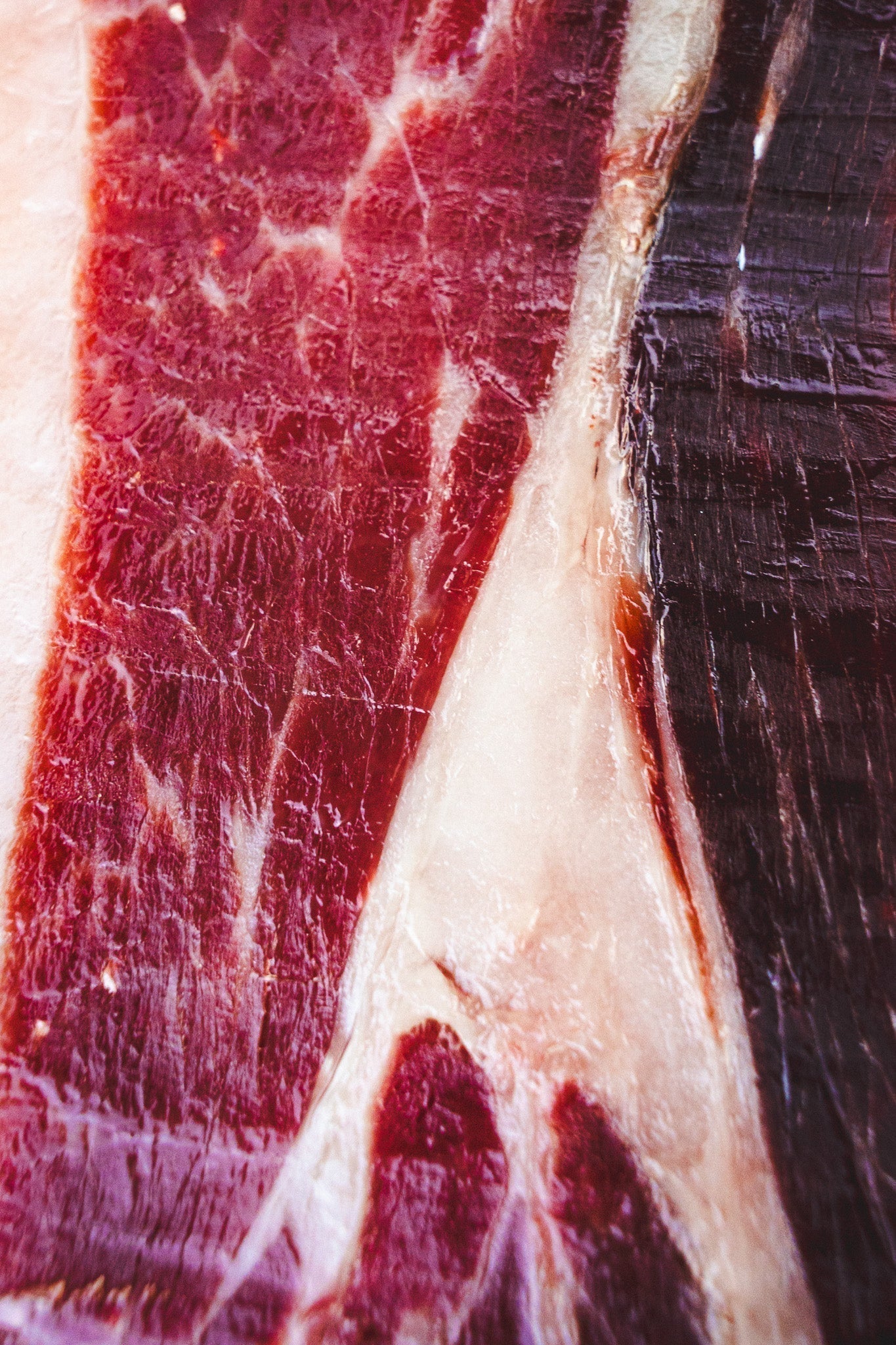
The fat, next. On a well-cured piece it is glossy rather than matt, and it gives slightly under the finger. Hard, dry fat points to a piece that dried too fast or was badly stored.
And the white crystals, last, which worry a lot of buyers. They are neither salt nor mould, but tyrosine, an amino acid that crystallises during long curing. Their presence is a good sign.
The black hoof proves nothing
It is the most persistent myth in the trade, and it gave the product its nickname. Yet Real Decreto 4/2014 never mentions the hoof. Not in the definition of the racial types, not in the labelling rules, not in the seal system. The colour of the trotter is not a grading criterion. “Pata Negra”, on the other hand, is a term the decree reserves for acorn-fed 100 % Iberian ham alone: it says nothing about the hoof, everything about the designation. Trust the seal.
Whole piece or sliced
This is the only decision in this guide that does not depend on the quality of the product. A whole piece and an 80 g pack can come from the same ham.
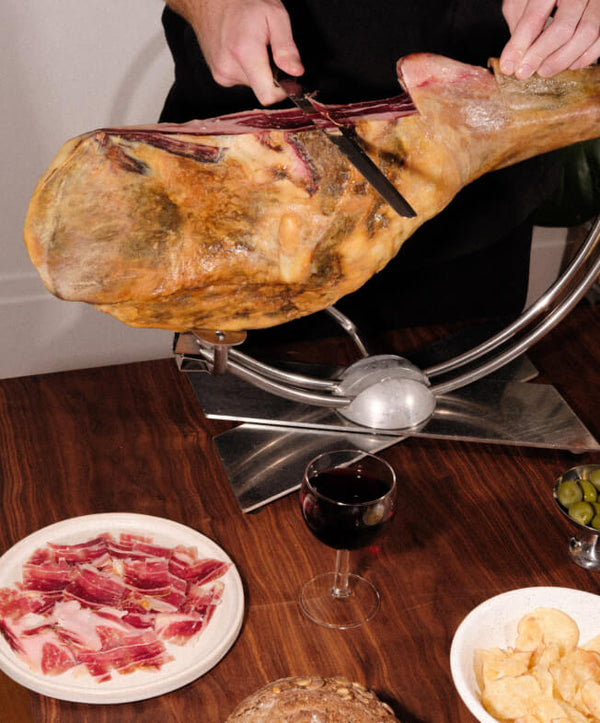
The whole piece is clearly cheaper per kilo, and it keeps for months. In exchange it takes equipment, space, a little technique, and a pace of eating that follows. A started piece left waiting six months is not a good deal.
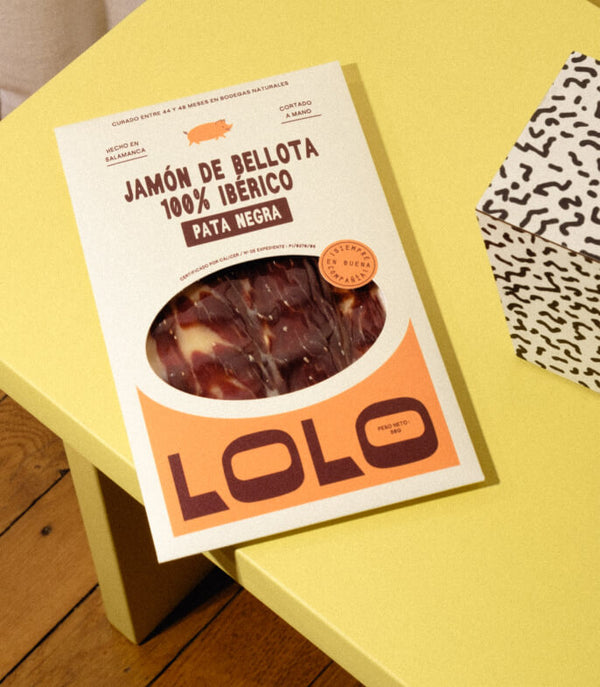
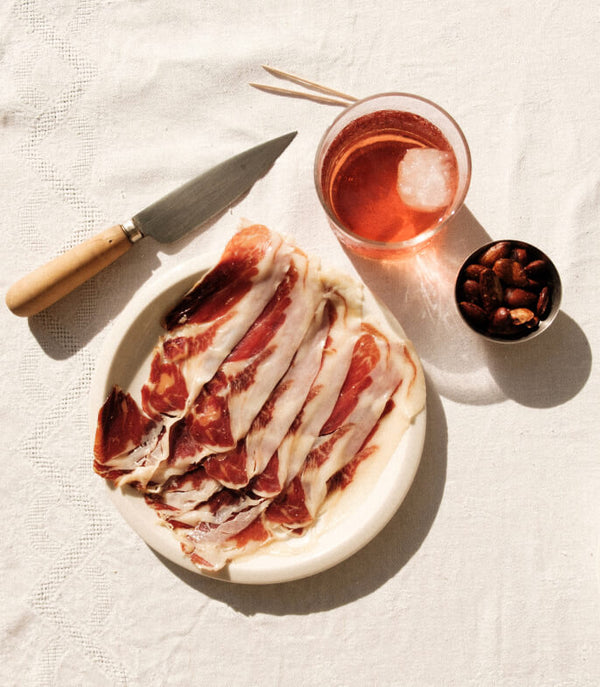
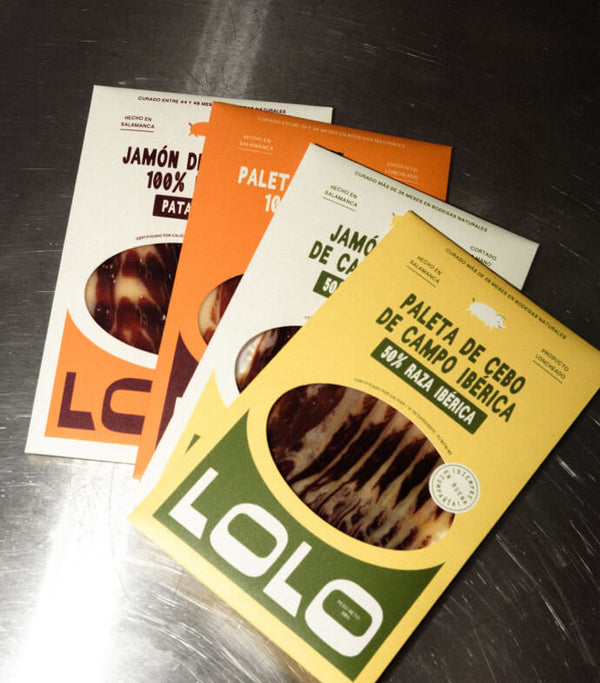
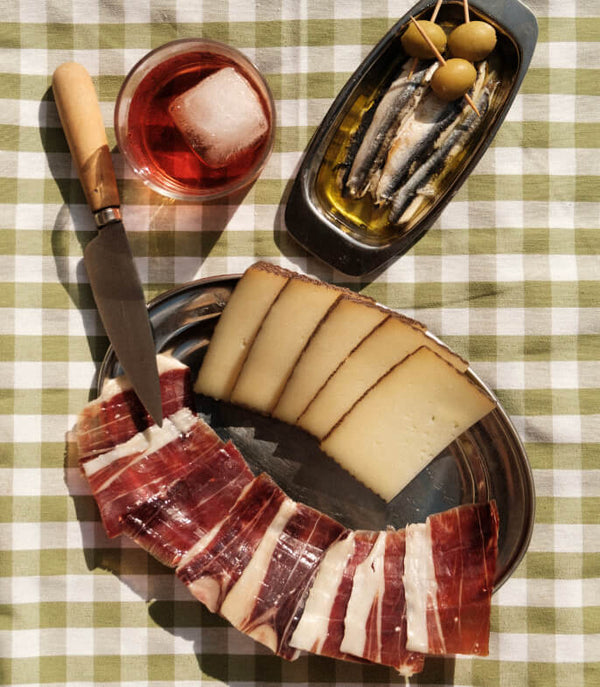
Sliced costs more per kilo and less in total. It asks nothing of you, keeps a few days once opened, and is perfect for discovering the product, for a gift, or for two people who will not get through eight kilos of ham.
Between the two, hand-carved is sliced ham of a better standard: the hand gives more even slices and respects the structure of the meat better than a machine.
The equipment, if you take a whole piece
- ✅ A stable stand. This is the most important point. A piece that moves is dangerous and carves badly. A rotating model saves you from unmounting the piece to turn it over.
- ✅ A long, flexible-bladed knife. It is the flex that makes the thin slice possible, not the length alone.
- ✅ A steel or a sharpening stone. A blunt blade tears instead of cutting, and wastes far more product than you would think.
- ❌ No home slicing machine. It warms the fat and crushes the slice. On a piece at this price, that is waste.
If carving is new to you, note that the piece is not uniform: the maza, the contramaza, the babilla and the punta have neither the same texture nor the same taste. We go through them in our article on the different parts of a jamón and a paleta.
Once the piece is started
A started whole ham is kept at room temperature, in a cool, airy room, never in the fridge. Cover the cut face with its own slices of fat, or with a clean cloth, to stop it drying out.
The best advice is still the simplest: carve a little often rather than a lot occasionally. A piece that is started and then forgotten deteriorates far faster than one you take a few slices from each week. The full detail is in our guide to storing a ham after opening.
Conclusion
Three steps, in this order
Most bad purchases come from an inversion: the format is chosen first, then the budget, and the category arrives last. It should be exactly the other way round.
- Settle the category. Look at the seal, look for the breed percentage. It is the only decision that bears on the quality of the raw material.
- Choose the format to match your pace. Whole piece if you eat it regularly and are equipped, sliced otherwise.
- Compare per kilo, never per pack. It is the only unit that lets you put two offers side by side.
Frequently asked questions
Does a black hoof guarantee a genuine Iberian ham?
No. Real Decreto 4/2014 never mentions the hoof: not in the definition of the racial types, not in the labelling, not in the seal system. The colour of the trotter is not a grading criterion. Only the seal, fitted at the slaughterhouse and controlled by an independent body, guarantees anything.
What are the white specks on the slices?
Tyrosine, an amino acid that crystallises during long curing. It is neither salt nor mould, and its presence points instead to a well-cured piece. It is one of the most common worries on opening the first pack, and there is no reason for it.
Should I buy a whole piece or sliced?
It does not depend on quality: both can come from the same ham. The whole piece is far cheaper per kilo but requires a stand, a knife and a regular pace of eating. Sliced costs more per kilo and less in total, and requires nothing.
What equipment do I need to carve a whole piece?
A stable stand, ideally rotating, and a long, flexible-bladed knife. Add something to sharpen with: a blunt blade tears the slice and wastes product. Avoid home slicing machines, which warm the fat and crush the slice.
How do I store a started whole ham?
At room temperature, in a cool, airy room, never in the fridge. Cover the cut face with its own slices of fat or a clean cloth. And carve regularly: that is what keeps a started piece best.
Sources
- Real Decreto 4/2014, consolidated text published in the Boletín Oficial del Estado: arts. 3 and 4 (sales denomination and labelling), art. 9 (seals). The text contains no mention of the hoof. Consulted on 25 August 2026.
- Carving and storage observations: our own daily practice. No competitor price was recorded or published.
The four in-depth articles
Written by

Valentin & Pablo
Founders of LOLO Jamón
We select our pieces in the drying cellars of the Salamanca dehesa, and we filmed a full montanera season for our documentary Viva España.
Once the category is settled
100 % Iberian acorn-fed jamones and paletas, black seal, from the Salamanca dehesa. As a whole piece or as an 80 g hand-carved pack.
See the Bellota selectionThe cebo de campo range is here · free shipping over €89.90

Leave a comment
This site is protected by hCaptcha and the hCaptcha Privacy Policy and Terms of Service apply.