


Vacuum-packed or carved to order: three formats, not two
Vacuum-packed ham is always set against ham carved to order, as if those were the only two options. There are in fact three formats, and the one figure that really separates them is not the one people expect: it is the price per kilo. The format that looks most affordable is by far the most expensive.
The essentials
What matters is not the vacuum. It is when the slice was cut, and what has been around it since.
- Three formats, not two: the whole piece you carve yourself, the plate already sliced and sealed, and ham carved to order at a counter.
- Our 80 g plates are vacuum-packed. It is the most protective of the sealed formats, and the label is required to say which one you have.
- The measured gap is between a sealed pack and open air, not between the two ways of sealing it.
- The date on the pack is set by the maker, from their own testing. Once it is opened, that date means nothing.
- Per kilo, the 80 g plate costs almost four times the whole piece. That is the real criterion.
Three formats, not two
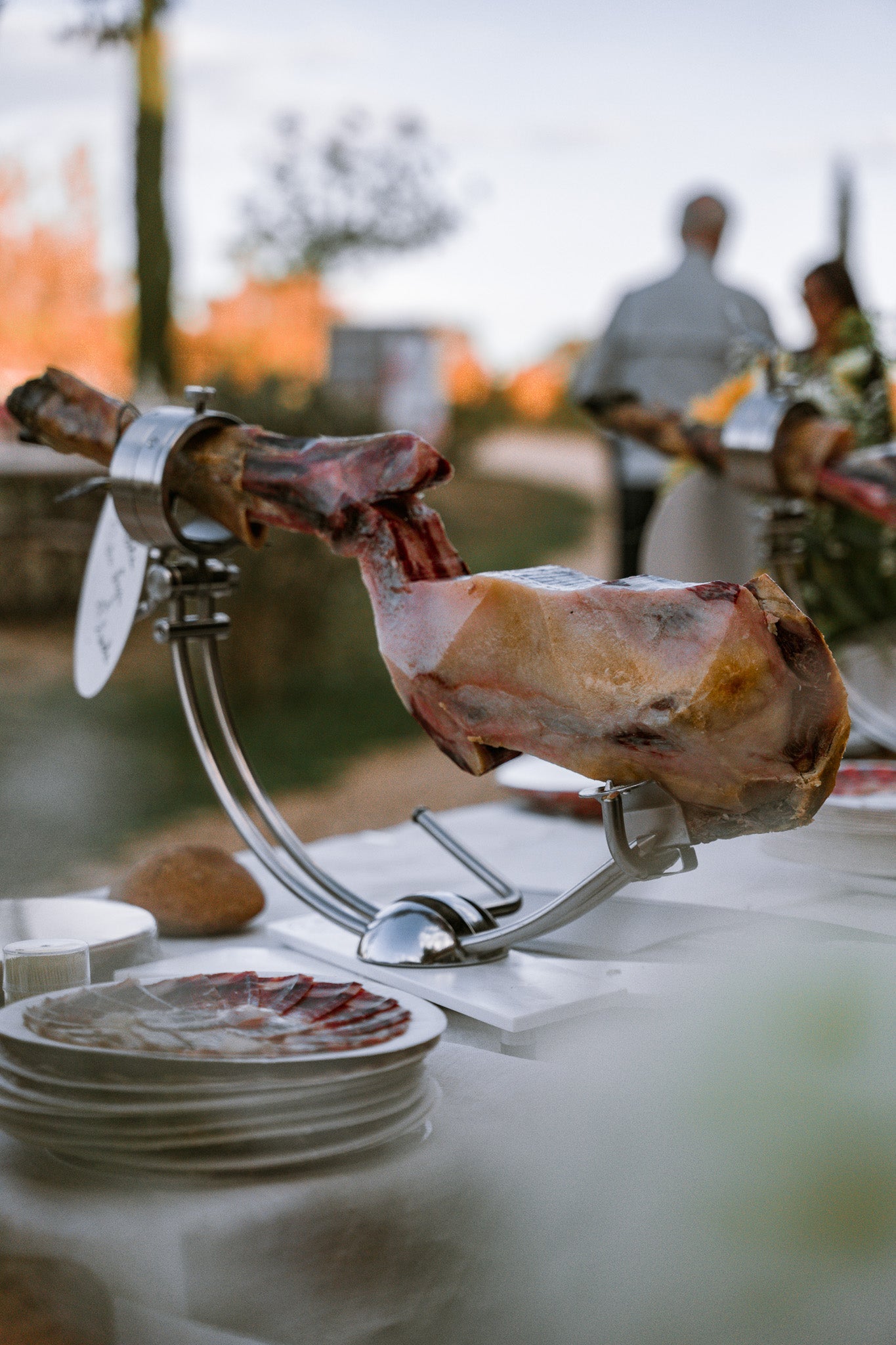
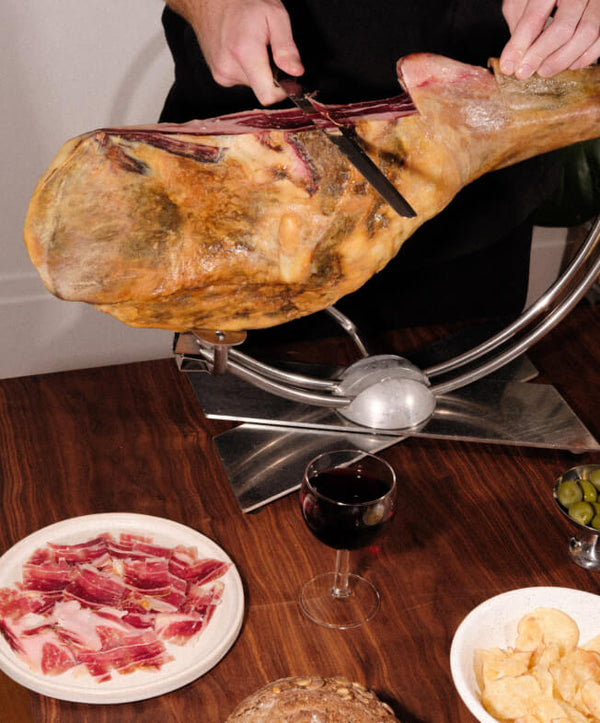
The whole piece. You buy it on the bone, put it on a stand and carve it over the weeks. It is the cheapest format per kilo by a wide margin, but it asks for a knife, a little space and the wish to get started.
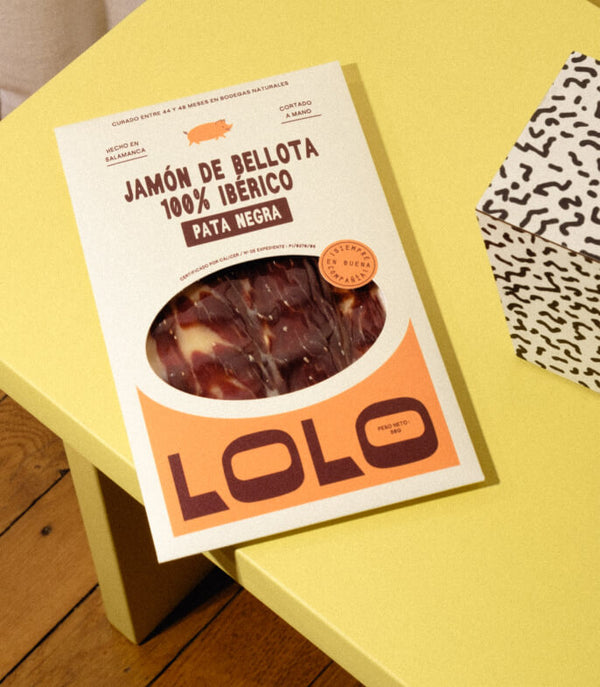
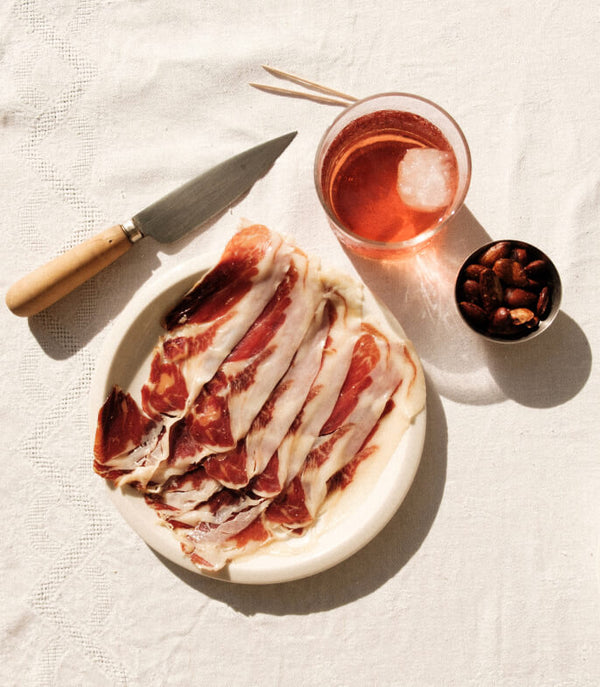
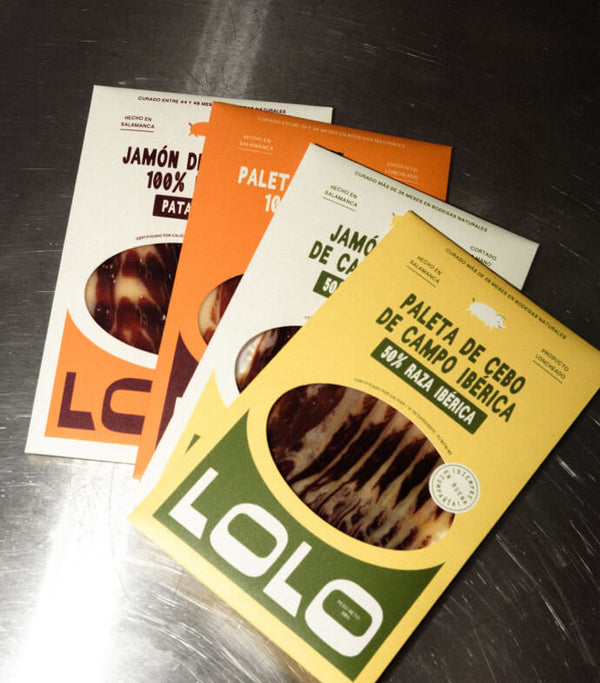
The ready-sliced plate. Someone has cut, weighed and sealed it for you. It is the most convenient format, and also the most expensive per kilo.
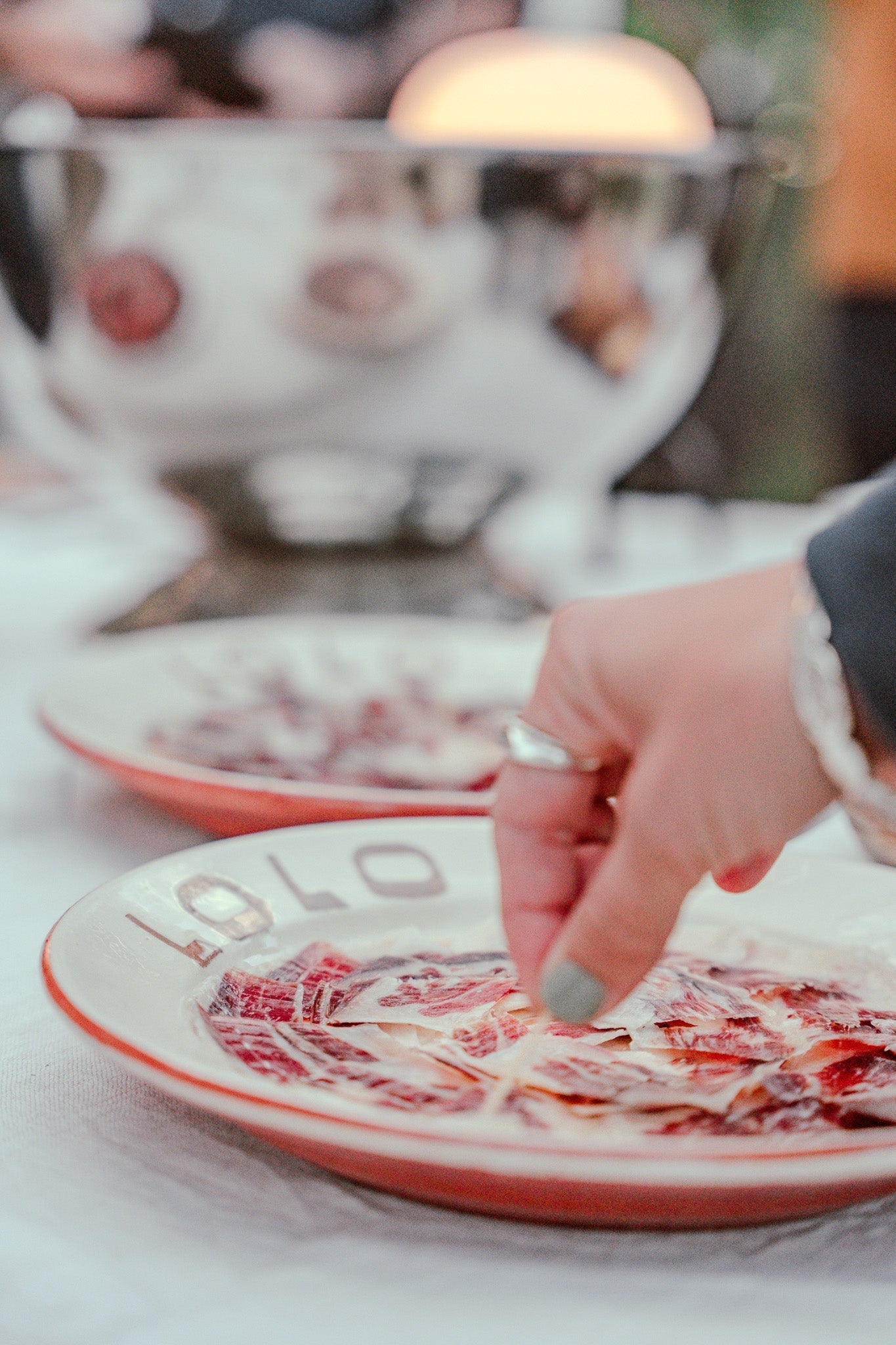
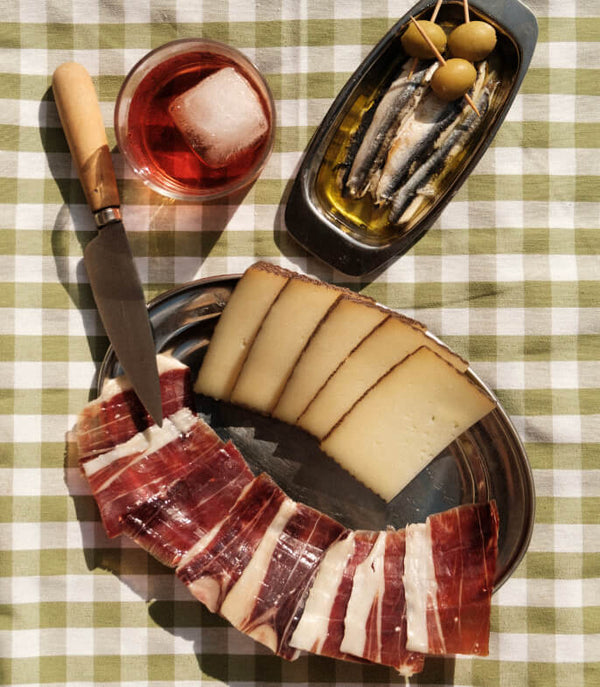
Carved to order. At a counter, in front of you. No storage and no packaging: you take it home and eat it that day, or the next.
And one detail worth knowing in a shop: a sealed pack can be sealed two ways. Under vacuum, the air is drawn out and the film clings to the slices. Under a protective atmosphere, the air is replaced with neutral gases and the tray stays puffed up. Regulation requires the second case to be written on the label. Our plates are vacuum-packed.
| The format | What it costs per kilo | What it asks of you |
|---|---|---|
| Whole piece on the bone, to carve | About 81 € | A knife, a stand, and getting started |
| 80 g plate sliced, vacuum-packed | About 311 € | Nothing at all |
| Carved to order at a counter | Depends on the shop | Eating it within two days |
Figures from our catalogue, on the same acorn-fed ham. We set them out in detail in a separate article.
What the packaging actually changes
The question everyone asks is “vacuum or not”. It is the wrong one. What has been measured is the gap between slices left in the open air and slices sealed in — whichever way they are sealed.
On dry-cured ham slices followed for twelve weeks, those left in the air oxidised twice as fast as the others. Between vacuum and protective atmosphere, by contrast, the gap is small and it does not always run the same way: one holds the colour slightly better, the other the flavour. Neither wins.
The mechanism is simple. Oxygen is what turns the fat and fades the colour. Removing the air or replacing it with neutral gases comes to the same thing: the product is deprived of its oxygen.
And dry-cured ham holds up far better than people say. On those same slices, the ones left in the open air still held their colour after four weeks. A slice does not spoil in five minutes because it has seen the air.
The twelve months on the pack, and what they are worth
“A vacuum pack keeps for twelve months”: you read it everywhere, and it comes from nowhere. No text sets it. In Europe, the shelf life of a food is determined by whoever makes it, from their own ageing tests, for their product and their packaging. Twelve months is a maker’s date, not a rule.
And above all: once the pack is open, that date means nothing. That is the position of the French authorities, who suggest looking instead at what the label says for after opening. When that wording is there, it comes from the maker’s testing on their own product. It is worth more than any general advice, ours included.
What gets said, and what has actually been measured
This subject is a nest of claims nobody has ever checked. We looked for them one by one, and this is what survives.
The most surprising result concerns the line everyone repeats, ourselves until now included: nobody has ever compared, on the same ham, slices cut to order and slices cut then packed. Freshly carved ham may well taste better. It is simply that no one has shown it.
| What you read everywhere | How it actually is | Verdict |
|---|---|---|
| “Carved to order has more aroma” | Nobody has ever compared the two on the same ham. | Not shown |
| “Vacuum packing gives a sour taste” | The explanation offered is wrong, and the measurement runs the other way. | False |
| “The machine heats the slice” | No blade temperature has ever been measured. | Not shown |
| “Hand carving beats the machine” | Nothing establishes it. The Spanish official programme teaches both at the same rank. | Not shown |
| “A pack keeps for twelve months” | That is the maker’s date, set from their own testing. | No source |
We have removed from this page everything we could not verify. There was a great deal of it.
The one gap that is not up for debate
On the same acorn-fed ham, the whole piece works out at about 81 € a kilo and the 80 g plate at nearly 311 €. Almost four times as much. It is by far the largest difference between the two formats, and the one least talked about.
The gap has reasons: the price of the whole piece includes the bone, which you do not eat. Then you pay someone to carve, the trimmings carving produces, the tray, the gases, and the cold chain to your door.
That is not a reason to avoid the plate — we sell them, and it is the format that suits most people. It is a reason to know what you are paying for. A whole piece is a commitment of several months and several hundred euros; a plate is a dinner.
How to choose, honestly
You have people over once or twice a year: the plate. You are paying for convenience, and it is worth the price for two dinners.
You eat it every week: the whole piece. It pays for itself within months, and it keeps very well — here is how.
You want the best a slice can be, tonight: carved to order, eaten the same day.
And in every case: take the slices out of the cold a good half hour before serving. That is the move that changes the taste most, long before the choice of packaging. Carving itself we have given a whole article.
Where this information comes from
The rules quoted here come from French and European official texts, and the effects described have been measured in published work: it is all listed at the foot of the page. When something has not been verified, we say so rather than invent a figure. And we sell Iberian ham in all three formats: you should know that before reading the above.
Conclusion
The packaging is the wrong question
Vacuum or protective atmosphere, the gap is small and it has never settled anything. What really separates the three formats is the price per kilo and the time you want to give it. The rest is commercial storytelling, including when we are the ones telling it.
- Look at the label on your tray. It says whether it is vacuum or protective atmosphere, and what to do after opening.
- Work it out per kilo. It is the only figure that really compares the three formats.
- Let it come up to temperature. Half an hour out of the cold changes the taste more than the packaging does.
Frequently asked questions
Is vacuum-packed ham worse?
Nothing shows that. Nobody has ever compared, on the same ham, slices cut to order and slices cut then packed. What is measured is that slices left in the air oxidise twice as fast as sealed ones.
What is the difference between vacuum and protective atmosphere?
In the first, the air is removed; in the second, it is replaced with neutral gases. A vacuum pack clings to the slices, a protective-atmosphere tray is puffed up. For keeping, the two are equivalent. The label is required to tell you which one you have; ours are vacuum-packed.
How long does a pack keep once opened?
Look at the label: when it carries a time limit after opening, that comes from the maker’s testing on their product. The date on the sealed pack no longer applies. Failing any wording, count on two to three days in the fridge, laid flat.
Should hand carving be preferred to a machine?
On the result in the plate, nothing establishes it: no comparison has been made. The Spanish official carving programme teaches both techniques at the same rank, in the same module, without ranking them.
Which format is cheapest?
The whole piece, by a distance. On the same acorn-fed ham it works out at about 81 € a kilo against nearly 311 € for the 80 g plate. The gap pays for the bone you do not eat, the carving, the packaging and the cold chain.
Sources
- Regulation (EU) 1169/2011, art. 9, 10 and 25: mandatory particulars, the “packaged in a protective atmosphere” statement, and storage conditions after opening.
- Regulation (EC) 1333/2008, Annex I: packaging gases form a class of additives in their own right.
- DGCCRF, practical note on use-by dates: once the package is opened, the printed date loses its usefulness.
- Regulation (EC) 2073/2005, art. 3 and Annex II: shelf life is established by the manufacturer, from their own testing and for their own packaging.
- Spanish Royal Decree 84/2026 of 11 February 2026: the carving module teaches knife and machine as two blocks of equal standing.
- Jin & Moon, Food Science of Animal Resources, 2024: dry-cured ham slices followed for 84 days at 10 °C, in air, under vacuum and under a protective atmosphere.
- Ramírez et al., Foods, 2021: sliced Iberian ham followed for twelve months at 4 °C, under vacuum and under a protective atmosphere.
- Austrich-Comas et al., Foods, 2023: the part played by available water, packaging type and temperature in sliced dry-cured ham.
- Corona, García-Pérez, Mulet & Benedito, Meat Science, 2013: hardening of slices kept cold.
- Fuentes, Ventanas, Morcuende & Ventanas, Meat Science, 2013: perception of ham according to serving temperature.
- Bremer & Matthiesen, Journal of Food Engineering, 2020: review of industrial slicing, which reports no measurement of blade heating.
Read next
Written by

Valentin & Pablo
Founders of LOLO Jamón
We import and distribute Iberian ham and charcuterie. We visit the farm every season and select the pieces ourselves.
Whole pieces
Hams and shoulders of bellota and cebo de campo, cured for 28 to 48 months. The cheapest format per kilo.
See the whole piecesShipping to France within 48 h. Secure payment.

Leave a comment
This site is protected by hCaptcha and the hCaptcha Privacy Policy and Terms of Service apply.