


Article: The four designations of origin for Iberian ham
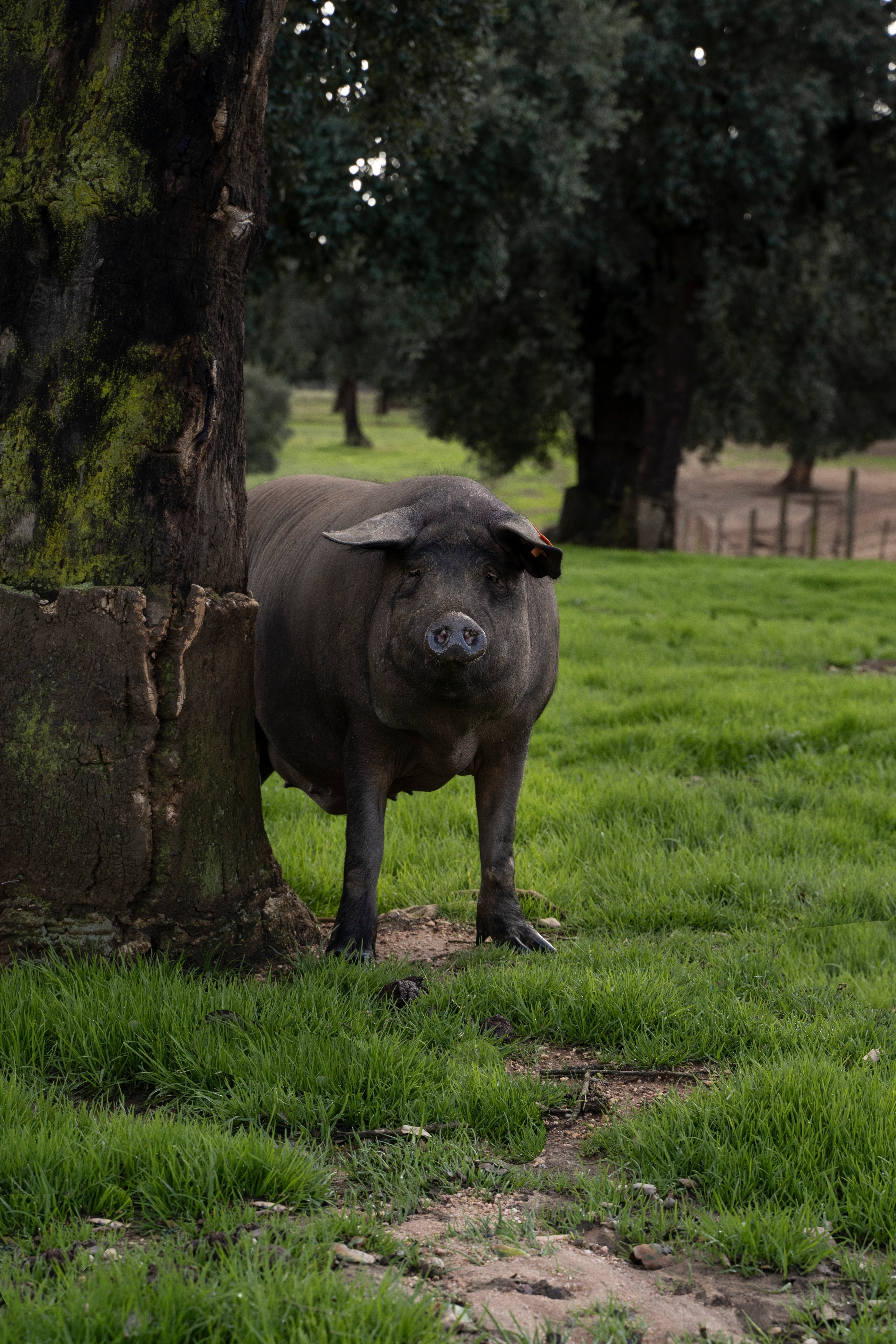
The four designations of origin for Iberian ham
Four protected designations of origin cover Iberian ham in Spain. They tell you where the piece comes from and under which set of rules it was produced. They do not tell you which is best, and plenty of excellent hams carry none of them. Here is what they actually guarantee.
The essentials
A designation of origin guarantees a place and a set of specifications, not a level of quality. It is information about provenance, not a ranking.
- Four designations cover Iberian ham: Guijuelo, Dehesa de Extremadura, Jabugo and Los Pedroches.
- A designation does not imply Iberian: the Teruel one covers white pig.
- And Iberian does not imply a designation: a 100 % Iberian bellota ham can be certified and sealed without belonging to any of the four.
- Each specification adds its own requirements on top of the national standard, and they do not do so on the same points.
Where this information comes from
The recognition dates, the geographical areas and the curing times come from the specifications published by the Spanish Ministry of Agriculture, and from the texts that register them in the Boletín Oficial del Estado and the Official Journal of the European Union. Every figure in this article was re-read against those documents on 25 August 2026.
This article is purely informational. You will find no ranking of the four designations in it, no brand named and no prices.
What a designation of origin guarantees, exactly
European law defines it in three conditions. The product comes from a given place. Its quality or characteristics are essentially due to that geographical environment, natural and human factors included. And, above all, every stage of production takes place within the delimited area.
That last condition is what separates a designation of origin from a geographical indication, which is looser and requires only one stage. For a ham it means the animal is born, raised, slaughtered, salted and cured in the same zone. An independent body verifies it, and the producer is entered on a register.
What the text nowhere says is that a ham under a designation would be better than another. It guarantees provenance and compliance with a set of specifications. Nothing more, which is already a great deal.
The four Iberian ham designations
| Designation | Where | Recognised in |
|---|---|---|
| Guijuelo | Guijuelo district, province of Salamanca | 1986, the oldest |
| Dehesa de Extremadura | Provinces of Cáceres and Badajoz | 1990 |
| Jabugo | Sierra de Aracena, province of Huelva | 1995, renamed in 2017 |
| Los Pedroches | North of the province of Córdoba | 2006, the most recent |
National recognition dates. Sources: specifications published by the Spanish Ministry of Agriculture and registration texts in the Boletín Oficial del Estado.
Guijuelo, Salamanca
Recognised by an order of 10 June 1986, it is the oldest of the four, in Spanish law as in European law. The specification places the district in the foothills of the Central System, between the sierras of Béjar and Francia, at an average altitude of 1,000 metres. It speaks of a dehesa fría castellana, a cold Castilian dehesa, and that is exactly what it is: long dry winters, which suit slow curing.
Dehesa de Extremadura
Recognised in 1990, it covers the holm oak and cork oak dehesas of the provinces of Cáceres and Badajoz, that is, all of Extremadura. Its specification speaks of close to a million hectares of dehesa. It is the only one of the four that sets no total curing time: it regulates the phases, not the whole.
Jabugo, Huelva
Recognised in 1995 as Jamón de Huelva, it has been called simply Jabugo since 2017, following a European implementing regulation of 2 March that year. You will often read “Jamón de Jabugo”: that is not the official name. The zone is the Sierra de Aracena, between 500 and 1,042 metres of altitude. The town of Jabugo itself sits at 653 metres and has a little over two thousand inhabitants.
Los Pedroches, Córdoba
The most recent, recognised by the regional government of Andalusia in 2006 and registered at European level in 2010. It covers the north of the province of Córdoba, around 300,000 hectares of holm oak dehesa, about a tenth of the Spanish total. It is also the most demanding on two points: it requires 100 % Iberian breed purity, and it caps stocking at one pig per hectare during the montanera, against the 1.25 the national rule allows.
A designation and Iberian are two different things
A designation does not mean Iberian. Jamón de Teruel, in Aragon, is a recognised designation of origin and it is made from white pig. The Spanish ministry classifies it in a separate category.
And Iberian does not mean a designation. What defines a “100 % Iberian bellota” is not a designation but a national standard, Real Decreto 4/2014, which applies to every Iberian product made in Spain, designation or no designation. A ham can therefore be 100 % Iberian bellota, certified and sealed by the book, without belonging to any of the four zones.
What each specification adds
A designation does not replace the national standard, it is added to it. Each specification can therefore be stricter, and the four are not stricter on the same points. Here are the minimum curing times they impose.
| Designation | Jamón | Paleta |
|---|---|---|
| Guijuelo | 730 days | 365 days |
| Jabugo | 600 days below 7 kg, 730 above | 365 days |
| Los Pedroches | 2 years | 1 year |
| Dehesa de Extremadura | No total time set | No total time set |
Minimum times written into each specification, consulted on 25 August 2026. A producer can always cure for longer.
The specifications also govern salting. Only one designation makes it binding: Los Pedroches, which requires 0.7 to 1.2 days per kilo. Jabugo and Extremadura give the one-day-per-kilo figure as guidance, and Guijuelo sets none. The “one day per kilo” rule you will read everywhere is therefore custom, not law.
On stocking density, the national rule already sets a cap for the montanera. Los Pedroches goes further and brings it down to one pig per hectare. For everything else the same rule applies, with a stocking rate that varies with tree cover. We set that mechanism out in our article on what the Iberian pig eats.
Conclusion
A map, not a ranking
The four designations draw a map of Spanish Iberian ham: the Castilian cold of Guijuelo, the expanse of Extremadura, the sierras of Huelva, the oak woods north of Córdoba. Each depends on a climate and a mountain range, and it comes through in the product.
But a designation tells you where a piece comes from and under which rules it was made. It does not tell you whether you will like it. For that, there remain the seal, the category and, in the end, the slice. Our buying guide sets out the four questions to ask, and our article on reading the label explains the seal system.
Frequently asked questions
How many designations of origin cover Iberian ham?
Four: Guijuelo, Dehesa de Extremadura, Jabugo and Los Pedroches. Spain has other ham designations and geographical indications, such as Teruel, Trevélez or Serón, but they cover white pig, not Iberian pig.
Is a ham without a designation of lower quality?
No. A designation guarantees a geographical origin and compliance with a specification, not a higher level of quality. The grading into bellota, cebo de campo or cebo and the breed percentage come from a national standard that applies to everyone, designation or not.
What is the difference between a designation of origin and a geographical indication?
For a designation of origin, every stage of production must take place within the delimited area. For a geographical indication, one stage is enough. That is the main difference, and it is demanding for a product that needs two years of curing.
Is the Jabugo designation called “Jamón de Jabugo”?
No. It was called “Jamón de Huelva” until 2017, when a European regulation renamed it simply “Jabugo”. The phrase “Jamón de Jabugo” circulates widely but is not the registered name.
Which designation cures the longest?
The minimums are close: 730 days for a jamón at Guijuelo and at Jabugo above 7 kg, two years at Los Pedroches. Dehesa de Extremadura sets no total time. These are floors: nothing prevents curing far longer, and that is what the best producers do.
Sources
- Specifications of the Guijuelo, Dehesa de Extremadura, Jabugo and Los Pedroches designations, published by the Spanish Ministry of Agriculture. Areas, altitudes, surfaces, curing times, salting and stocking densities.
- National recognition orders and European registration regulations, Boletín Oficial del Estado and Official Journal of the European Union. Jabugo name change: Commission Implementing Regulation (EU) 2017/385 of 2 March 2017.
- Definition of a designation of origin: Regulation (EU) 2024/1143, which replaced Regulation (EU) 1151/2012.
- Real Decreto 4/2014 for the Iberian quality standard. Population and altitude of Jabugo: the public statistical institute of Andalusia.
Read next
Written by

Valentin & Pablo
Founders of LOLO Jamón
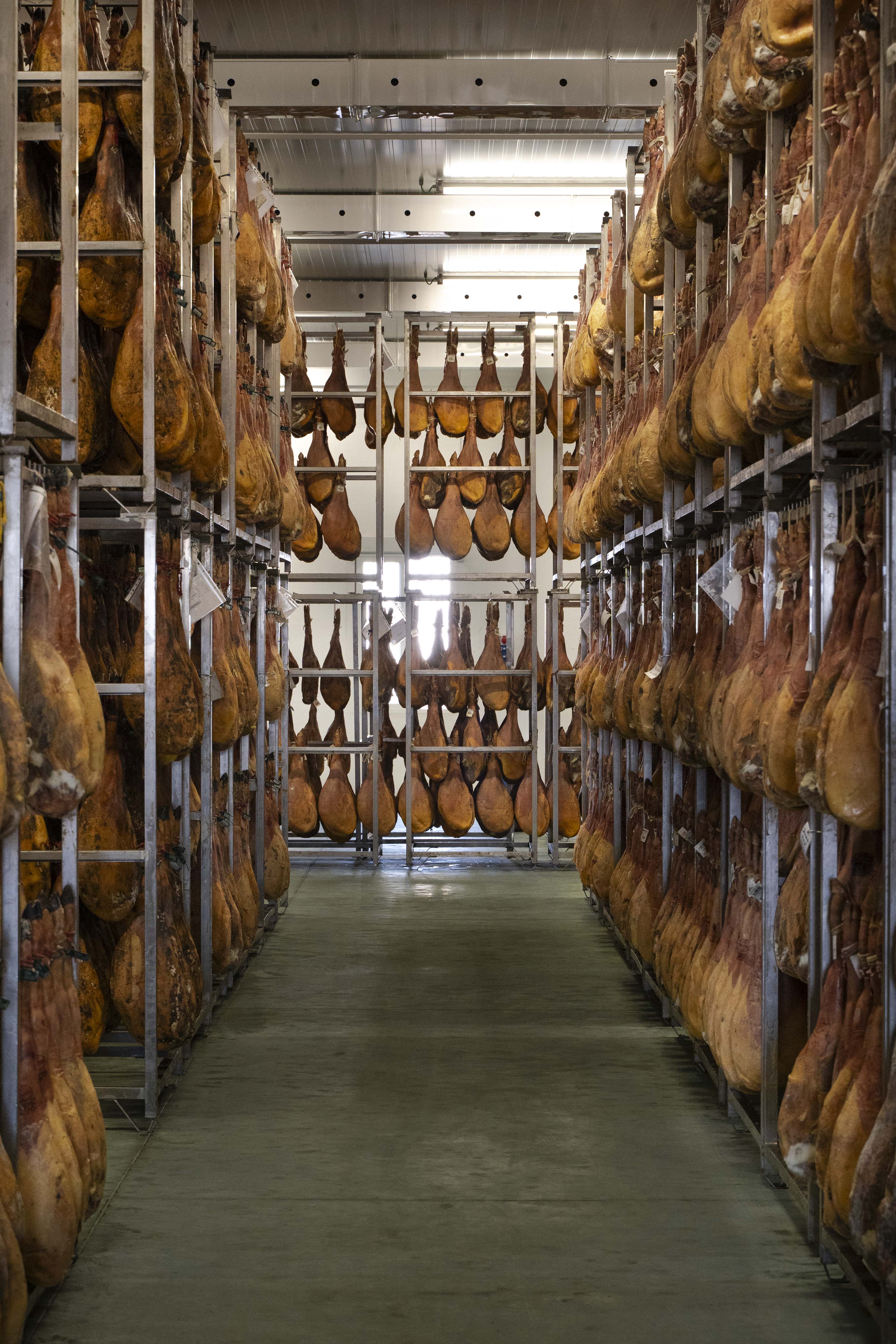
We select our pieces in the drying cellars of the Salamanca dehesa, and we filmed a full montanera season for our documentary Viva España.
Salamanca dehesa, black seal
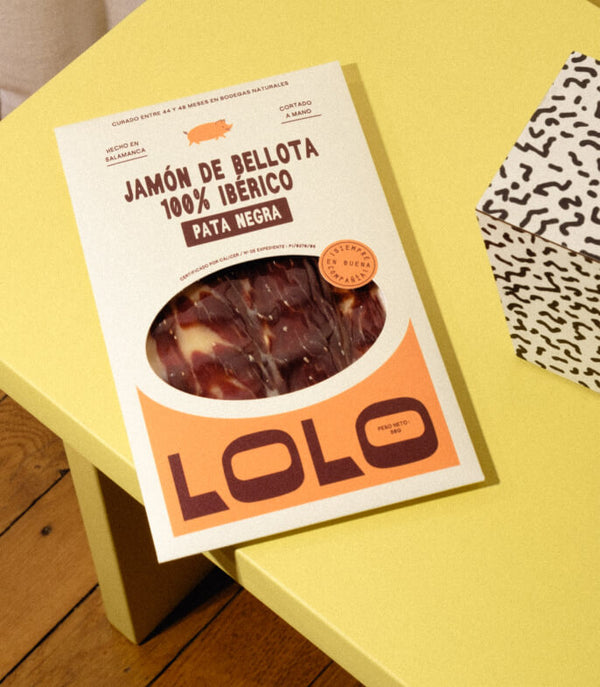
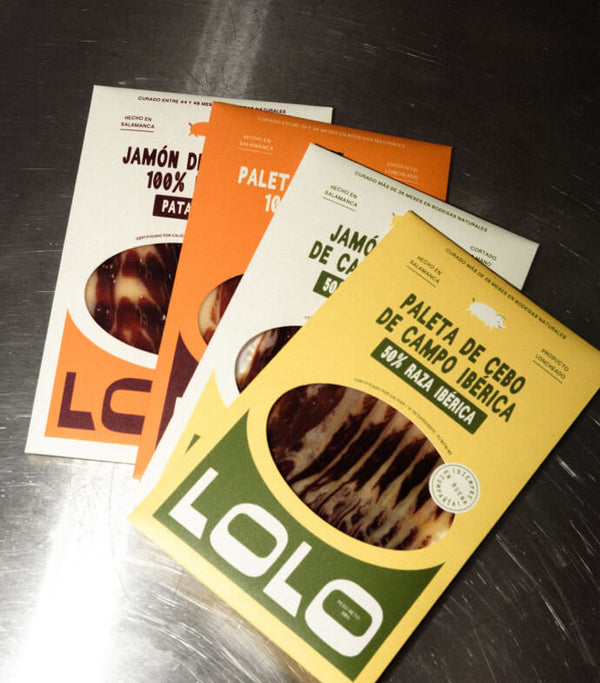
100 % Iberian acorn-fed jamones and paletas, cured 32 to 48 months depending on the piece. As a whole piece or as an 80 g hand-carved pack.
See the Bellota selectionThe cebo de campo range is here · free shipping over €89.90

Leave a comment
This site is protected by hCaptcha and the hCaptcha Privacy Policy and Terms of Service apply.