


Article: Storing a started ham: does it need the fridge?

Storing a started ham: does it need the fridge?
You have started a good piece and you are wondering where to keep it. Short answer: not in the fridge, and not under cling film. Dry-cured ham is made to keep in the open air. What needs protecting is not the piece — it is the face you have just opened.
The essentials
Dry-cured ham does not need cold to keep. Salt and years of drying have already done that job.
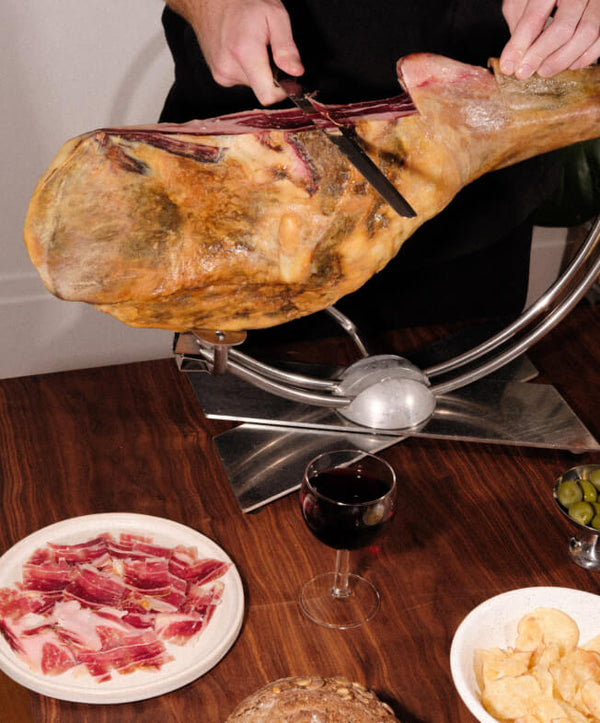
- A whole piece keeps in the open air, in the coolest room in the house, at 15 to 20 °C if you can.
- Cover the cut face with the fat you took off it, then a clean cloth.
- Before each new carving session, take off the first few millimetres. That is the single most important thing you can do.
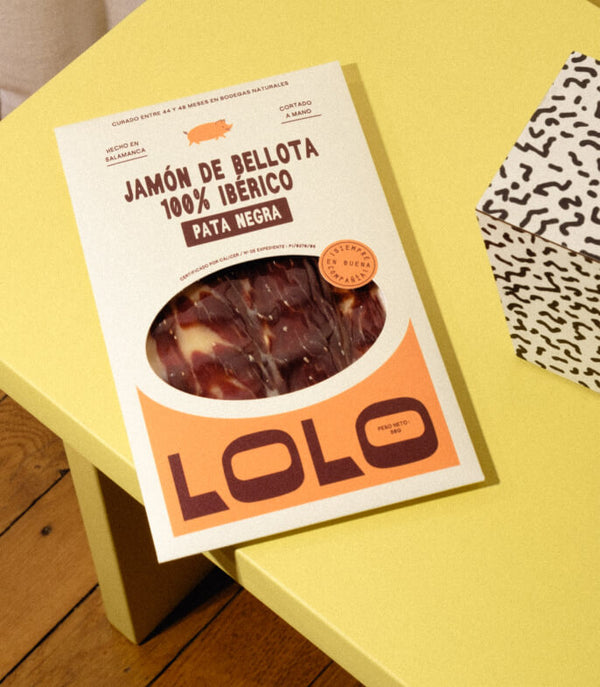
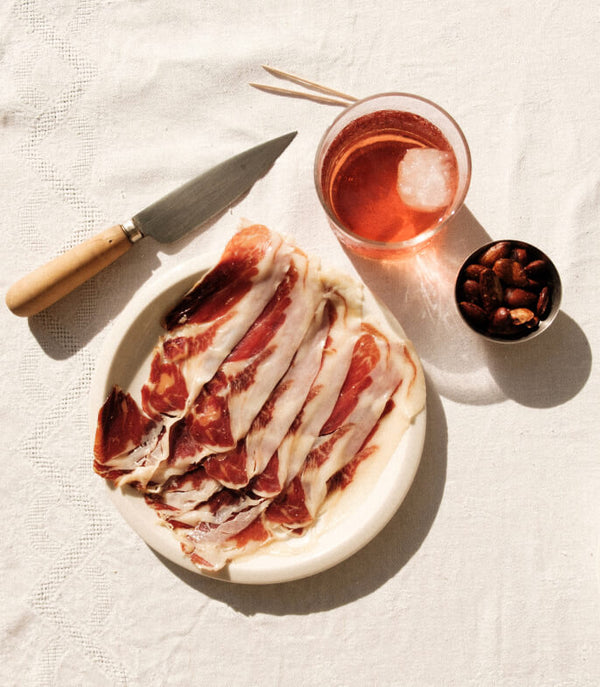
- Slices, on the other hand, go in the fridge, and get eaten within two or three days.
- Cooked ham is a different animal: it is a fresh product and it needs cold.
Why it does not need cold
Hams have been salted and dried for centuries for exactly this reason: so they could be kept without a fridge. Salt drove the water out, and with no water available bacteria do not grow. That is the whole principle, and it still works today just as it worked before electricity.
This is where the confusion usually starts. The word “ham” covers two products with nothing in common. Cooked ham is exactly that — cooked, moist, and quick to spoil outside the fridge. It is the one regulation watches closely. Dry-cured ham has spent two to four years losing its water. It is stable.
So what limits the life of your piece is not a safety risk. It is simply that the open face dries out, and that the fat eventually turns. Two slow problems, and both easy to slow down further.
| What you have | What spoils it | Where to keep it |
|---|---|---|
| Whole opened piece | The cut face drying out | In the open air, in a cool room |
| Boneless piece | Drying, over a far larger surface | Somewhere cool, in a cloth |
| Slices carved or an opened pack | Air: the colour fades, the fat turns | In the fridge, away from light |
| Cooked ham cooked, sliced | Bacteria, and those are real | In the fridge, no argument |
A whole piece and a pack of slices are not the same problem. That is the one thing to take from this table.
What cold changes, if you use it anyway
The fridge will not make your ham dangerous. It will simply make it less good, in two ways.
It hardens the slice. The fat sets, and that melting quality is precisely what you paid for. You will need to let the piece come back up to temperature for far longer before serving.
It brings out a white deposit on the cut. A fine whitish powder, more common when the piece is kept cold. It is not mould and it is not serious, but it is unsightly.
If your kitchen is at 30 °C in August, put it somewhere cold without hesitating: better a slightly firm ham than a sweating one. The rest of the year, leave it out.
The real subject: protecting the cut face
The moment you open a piece, you expose to the air a surface that never had been. It will dry. Everything that follows exists only to slow that down.
The covering fat. When you prepare the piece you take off a layer of yellow fat. Keep it. Put it back on the cut after each session: it comes from the ham, it fits the shape, and it limits contact with the air without smothering it.
A clean cloth on top. Cotton or linen, nothing more. It keeps dust off and lets air through.
And above all: re-cut. Before each new session, take off the first two or three millimetres, the ones that have dried and darkened. A fresh slice appears underneath. That gesture counts for more than anything you can lay on the piece.
For the rest — the angle, the thickness, which face to start from — we have given it a whole article.
What about cling film?
Everyone advises against it. But let us be clear: nobody has ever compared it with a cloth. And this year, in the Spanish press, two master carvers gave exactly opposite advice on the question.
What we do, and why: fat and a cloth, because they let the piece breathe a little. Film, pulled tight over a still-moist cut, holds moisture against the meat. That is common sense, not proof.
How long it keeps
A whole piece lasts months, as long as you trim it each time. You will see every number imaginable in circulation; none of them rests on anything. In practice an opened piece is finished comfortably within two or three months, and it is the rate you eat it at that decides.
Slices, two to three days. Carved to order, they have no protection at all. In the fridge, laid flat, not stacked. It is the same benchmark we give in our comparison of vacuum packs.
An opened vacuum pack: trust the label. It carries the manufacturer’s own testing on their own product, which beats any general advice, ours included. And take the slices out of the cold a good half hour before serving: barely warmed through, they taste like a different ham.
Freezing, no. Not on a good piece. Nothing forbids it, but you will lose in texture what you think you are gaining in time.
| What you read everywhere | How it actually is | Verdict |
|---|---|---|
| “Refrigerate it quickly after opening” | Not a whole piece. Cold hardens it and gives nothing back. | False |
| “Eat within fifteen days” | A piece trimmed at each session lasts far longer. | No source |
| “Between 15 and 25 °C, 60 to 70 % humidity” | Precise values that no text sets. A cool, airy room is enough. | No source |
| “Cling film stops the ham breathing” | Nobody has shown that. A cloth remains preferable, on common sense. | No source |
| “White specks are a sign of mould” | They are crystals that form during long curing. | False |
We have removed from this page every figure we could not verify. Few were left.
When to worry, and when not to
A white powdery deposit on the cut: nothing serious. It comes off with the knife, and mostly it tells you the face has dried out.
Small hard white specks inside the meat: those are crystals, and they are a good sign in a long-cured piece. We have explained them here.
Cottony fuzz on the outside of the piece: that one is mould. Brush it off, and eat the ham — that is what the food safety services recommend. It does not go into the meat.
A rancid smell, a slimy surface: no argument there, throw it out. Your nose is the only instrument you need, and it is a very good one.
Where this information comes from
The rules quoted here come from Spanish and European official texts, and the effects described have been measured in published work: it is all listed at the foot of the page. When something is not established, we say so rather than invent a figure. And we sell Iberian ham: you should know that before reading our storage advice.
Conclusion
Protect the slice, not the piece
Dry-cured ham is made to last without cold. What spoils it in your home is not a bacterium, it is the air on the few square centimetres you have just opened. The rest is secondary.
- Whole piece out, slices cold. That is the whole rule.
- The fat, then a cloth. Nothing more complicated than that.
- Trim before each session. That is what really makes the difference.
Frequently asked questions
Should an opened ham go in the fridge?
Not a whole piece. Dry-cured ham keeps at room temperature — that is the whole point of salting it. Cold does not ruin it, but it hardens the slice for nothing. Keep it in the coolest room in the house.
How long does an opened ham keep?
Months, if you take off the first few millimetres before each carving session. No official duration exists, despite all the numbers in circulation. In practice the rate you eat it at is what decides.
What should I cover the cut face with?
The fat you removed when preparing the piece, put back after each session, and a clean cloth on top. It is the traditional method, and it works.
Are white specks a sign of mould?
No. The small hard specks inside the meat are crystals that form during long curing, and they are rather a good sign. Mould is cottony and stays on the outside of the piece.
What about cooked ham?
An entirely different product: cooked, moist and fragile. Fridge, and follow the date on the label.
Sources
- Spanish quality standard for meat products, Royal Decree 474/2014, art. 11.1: salted and cured products are defined by their stability at room temperature, as against those requiring refrigeration.
- Regulation (EC) 2073/2005, Annex I: below a certain level of available water, a ready-to-eat food does not support the growth of Listeria monocytogenes.
- Scientific Committee of the Spanish food safety agency, report AESAN-2023-004: measurement on dry-cured ham, and the conclusion that these products can be stored at room temperature — unlike sliced cooked meats.
- Regulation (EU) 1169/2011, art. 25: statement of storage conditions after opening the package.
- USDA / FSIS, Ham and Food Safety: storage times for dry-cured ham, and the instruction on surface mould.
- Arnau, Gou & Guerrero, Journal of the Science of Food and Agriculture, 1994: the white surface deposit increases as storage temperature falls.
- Corona, García-Pérez, Mulet & Benedito, Meat Science, 2013: at 6 °C for 120 days, the hardness of sliced Iberian ham increases.
- Ramírez et al., Foods, 2021: stability of sliced Iberian ham kept cold for twelve months.
- Fuentes, Ventanas, Morcuende & Ventanas, Meat Science, 2013: perception of ham according to serving temperature.
- Royal Decree 84/2026 of 11 February 2026: the Spanish carving qualification requires storage to be described, without setting any values for it. Accessed 30 August 2026.
Read next
Written by

Valentin & Pablo
Founders of LOLO Jamón
We import and distribute Iberian ham and charcuterie. We visit the farm every season and select the pieces ourselves.
Whole pieces
Hams and shoulders of bellota and cebo de campo, cured for 28 to 48 months.
See the whole piecesShipping to France within 48 h. Secure payment.


Leave a comment
This site is protected by hCaptcha and the hCaptcha Privacy Policy and Terms of Service apply.