


Ibérico ham or shoulder: which should you choose?
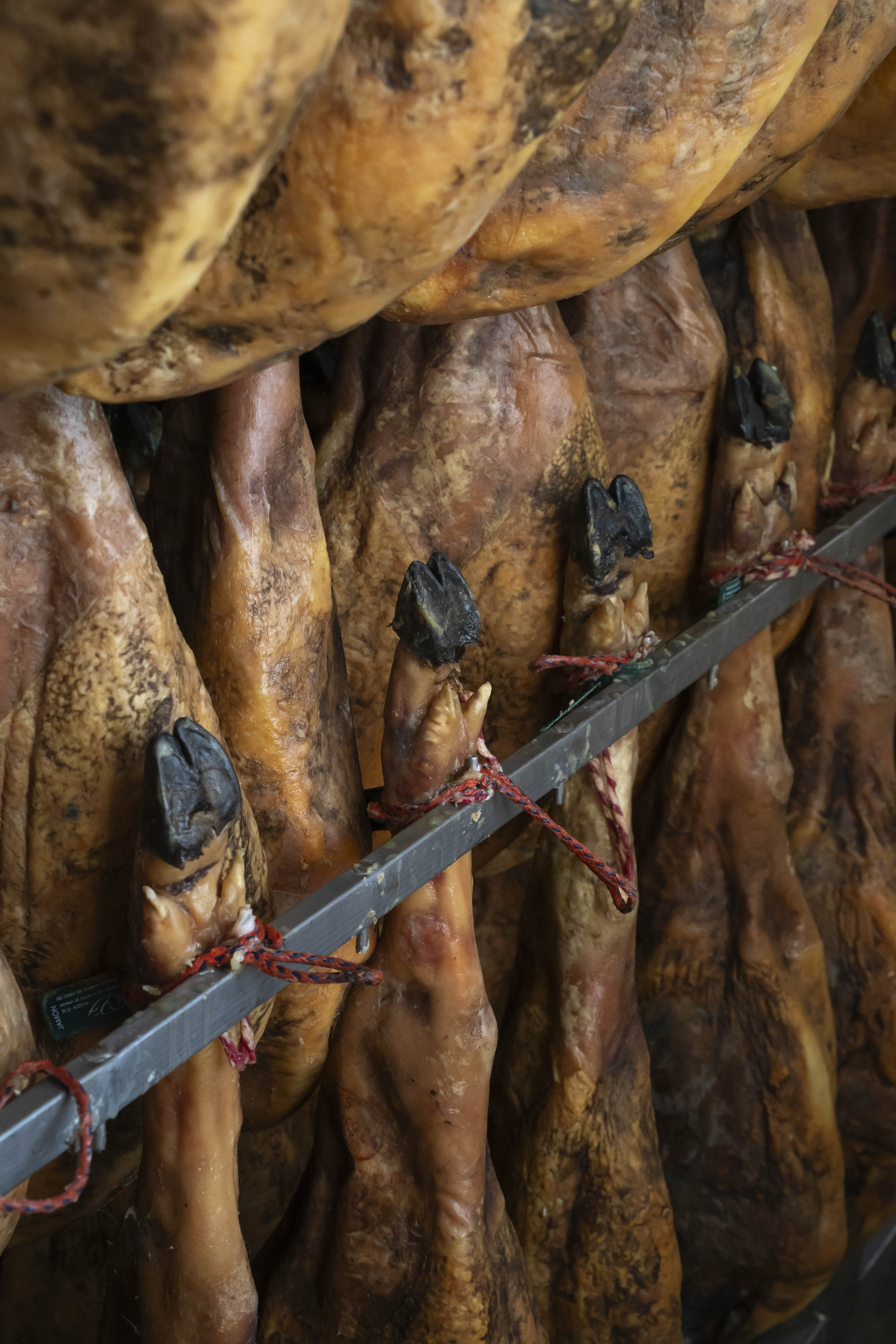
The ham comes from the pig’s hind leg, the shoulder from the foreleg. Everything else follows from that one difference: the weight, the curing time, the way it is carved and, in the end, the flavour. These are not two grades of quality. They are two different pieces.
The short answer
A shoulder weighs roughly half what a ham weighs. It holds a broad, flat shoulder blade instead of long bones, which makes carving more technical and the yield lower.
- Our hams weigh 7 to 8 kg, our shoulders 4 to 5 kg.
- The law does not ask the same of both: 730 days of curing for a ham of 7 kg or more, 365 days for a shoulder.
- In our cellars, an acorn-fed ham comes out between 44 and 48 months, an acorn-fed shoulder between 32 and 36.
- The shoulder tastes more concentrated and more saline, the ham longer and more nuanced. At equal seal, neither is superior to the other.
Where this information comes from
The minimum curing times come from Royal Decree 4/2014, article 12, consolidated text published in the Boletín Oficial del Estado and reread on 25 August 2026. The weights and curing times of our own pieces come from our catalogue, checked the same day.
The flavour descriptions come from our own tastings. We sell both pieces, so we have no interest in crowning a winner, and you will see that we do not.
One hind leg, one foreleg
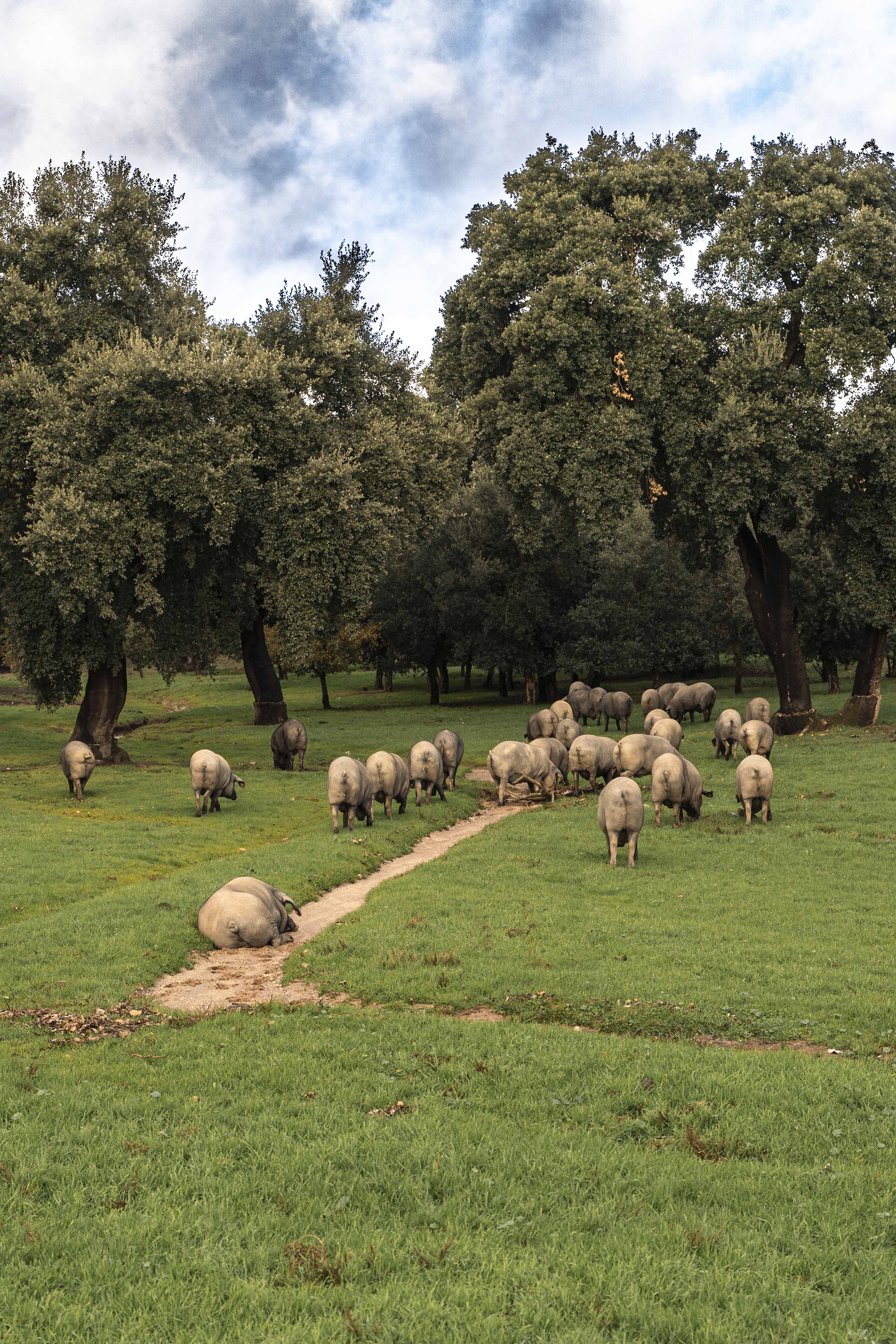
The ham is the hind leg. It is the limb that drives the animal forward, and in an Ibérico pig ranging across the dehesa all day, it works hard. It is built around long bones, the femur and the tibia, lined up inside an elongated piece.
The shoulder is the foreleg. It carries weight rather than pushing, and it hangs not from the hip but from the scapula, a broad flat bone lying flat inside a piece that is already smaller. That shoulder blade explains almost everything that follows.
Two immediate consequences. The piece is shorter and more irregular, so harder to slice cleanly. And the proportion of bone to meat is higher, which leaves fewer slices at the end.
| Criterion | Ham | Shoulder |
|---|---|---|
| Origin | Hind leg | Foreleg |
| Bone structure | Long bones, aligned | Broad, flat shoulder blade |
| Weight of our pieces | 7 to 8 kg | 4 to 5 kg |
| Legal minimum curing | 730 days from 7 kg, 600 below | 365 days, whatever the weight |
| Our curing, acorn-fed | 44 to 48 months | 32 to 36 months |
| Our curing, free-range grain-fed | 36 months | 28 months |
| Carving | Long, even slices | Short slices, frequent turning |
| Profile on the palate | Longer, more nuanced | More concentrated, more saline |
Legal durations: Royal Decree 4/2014, art. 12. Weights and curing: LOLO Jamón catalogue, checked 25 August 2026. Palate profiles: our own tastings.
Why a shoulder yields less when carved
From a shoulder you get fewer slices per kilo bought than from a ham. Three reasons, all of them visible to the naked eye once the piece is on its stand.
The shoulder blade takes up room. It is a flat, wide bone set inside a piece that already weighs half what a ham does. The proportion of bone is therefore mechanically higher.
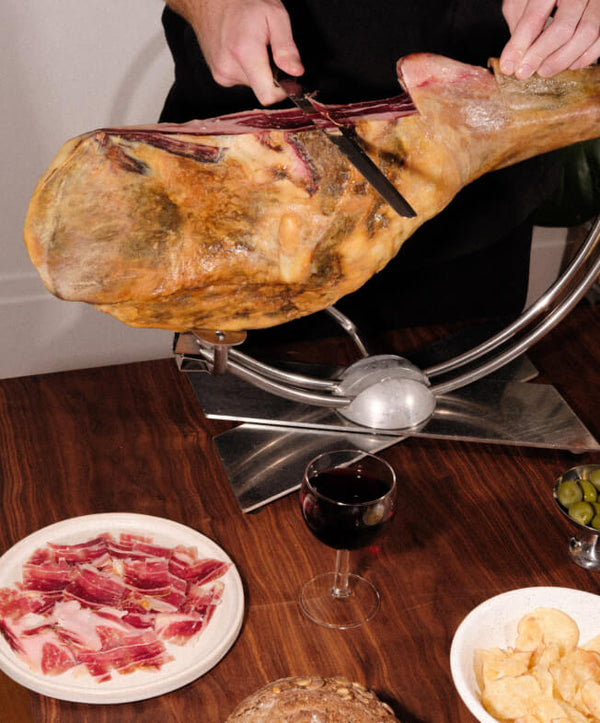
The shape forces you to turn the piece more often. On a ham you work broad, regular surfaces and carve from the same side for a long time. On a shoulder the working faces are smaller and the knife reaches bone sooner.
Finally, the hand matters more. A shoulder carved by someone experienced gives noticeably more than one carved by a beginner, and the gap is wider than it is on a ham.
Why we give no percentage
You will often read that a ham yields 40 to 50% meat and a shoulder 30 to 40%. Those figures travel from site to site without anyone ever citing a source, and we have found none published. They also depend on the exact weight of the piece, on its curing, and above all on who is holding the knife. We would rather tell you that a shoulder yields less, and why, than invent a precise number.
What changes on the palate
This is what we observe when we taste our own pieces. It is not a measurement. It is a repeated observation.
The shoulder arrives sooner. The flavour is more direct, more saline, with a rustic edge that many people love. On a board, it stands out immediately.
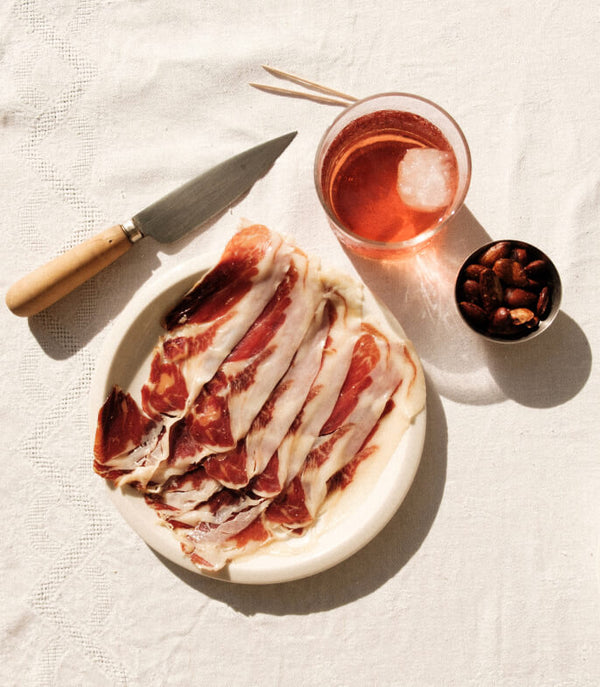
The ham takes its time. It starts gentler, develops hazelnut notes and lingers longer. It is a piece that rewards slow tasting and thin slices.
The curing gap explains much of it. Our acorn-fed hams spend twelve to sixteen months longer in the cellar than our acorn-fed shoulders, and it tells in the length of the finish.
Which one to take, and when
- ✅ The shoulder, if a whole piece is new to you. Smaller, it is eaten within a shorter window and costs less per piece.
- ✅ The shoulder, if you like forthright flavours. Its concentration is a strength, not a flaw.
- ✅ The ham, if you entertain often. It lasts across several servings and yields more when carved.
- ✅ The ham, for an occasion. A whole leg on its stand has an effect a shoulder will never have.
- ❌ Neither, if you own no stand and no knife. Buy sliced in the meantime: a whole piece carved badly wastes the product.
Conclusion
The seal counts for more than the piece
If you take one thing away: a black-seal acorn-fed shoulder beats a grain-fed ham. The choice of piece comes after the choice of category, never before.
Once the category is settled, the decision is simple.
- Look at the seal first. Black, red, green or white: it determines the quality of the raw material.
- Then choose the piece to match your rhythm. A shoulder for regular, close-together eating; a ham for entertaining.
- Finally check that you are equipped. A steady stand and a sharp knife, or sliced remains the better choice.
Frequently asked questions
What is the difference between an Ibérico ham and an Ibérico shoulder?
The ham is the hind leg, the shoulder the foreleg. The shoulder weighs roughly half as much, holds a broad flat shoulder blade instead of long bones, and cures for less time: 365 days as the legal minimum against 730 for a ham of 7 kg or more.
Is the shoulder lower quality?
No. Quality comes from the seal, meaning the breed and the diet of the animal, not from which piece was taken off it. An acorn-fed 100% Ibérico shoulder and an acorn-fed 100% Ibérico ham come from the same pig.
How long must a shoulder cure?
The legal minimum is 365 days, whatever its weight (art. 12 of Royal Decree 4/2014). That is a floor, not a target: our acorn-fed shoulders come out between 32 and 36 months, and our free-range grain-fed shoulders at 28 months.
Is a shoulder harder to carve?
Yes, noticeably. The shoulder blade is flat and wide, the working faces are smaller, and the piece has to be turned more often. It can be done at home with a good stand and a sharp knife, but the gap between expert carving and hesitant carving shows more than it does on a ham.
How many slices do you get from a shoulder?
Fewer than from a ham of the same weight, and we will not give a percentage. The figures circulating on this rest on no published source, and the real yield depends on the weight of the piece, its curing, and the experience of whoever is carving.
Sources
- Royal Decree 4/2014, consolidated text published in the Boletín Oficial del Estado, art. 12: minimum production times for ham, shoulder and loin. Consulted 25 August 2026.
- Weights and curing times of our own pieces: LOLO Jamón catalogue, checked 25 August 2026.
- Flavour descriptions: our own tastings. No carving yield is published in this article, for want of a verifiable source.
Read next
Written by

Valentin & Pablo
Founders of LOLO Jamón
We select our pieces in the drying cellars of the Salamanca dehesa, and we filmed a full montanera season for our documentary Viva España.
Ham or shoulder, the same seal
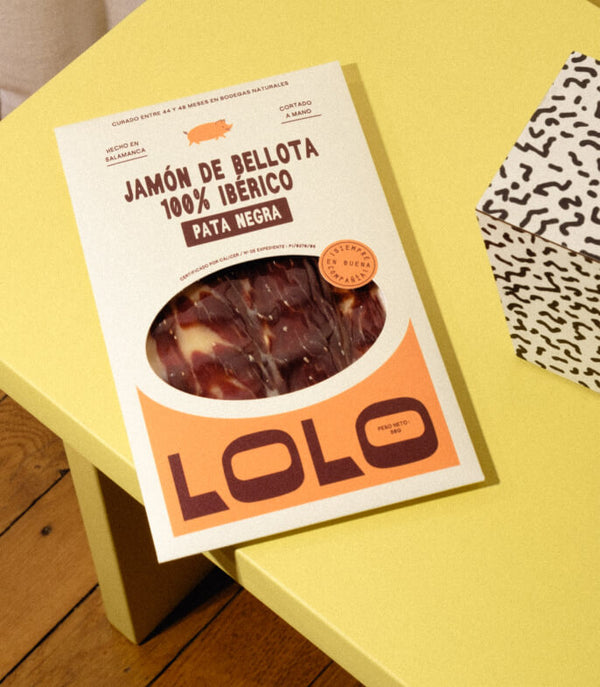
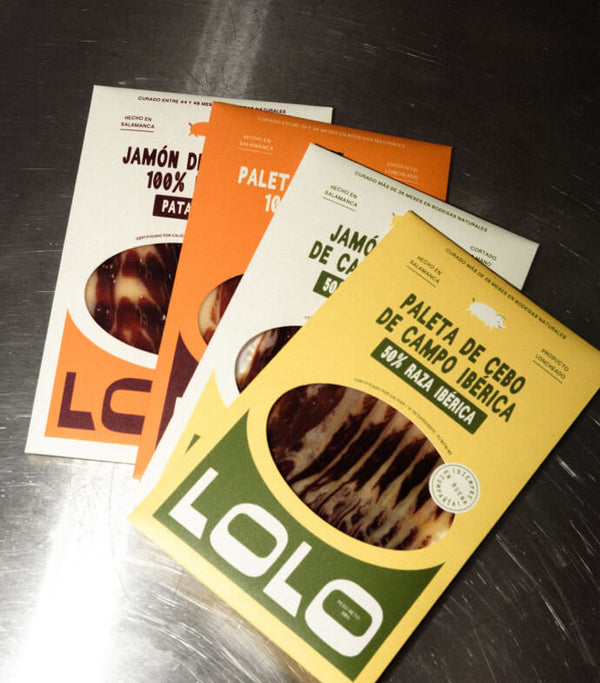
Our whole acorn-fed 100% Ibérico pieces come from the same pigs and the same dehesa. The format is yours to choose.
Explore the Bellota selectionShipped from Spain · free shipping over €89.90


Leave a comment
This site is protected by hCaptcha and the hCaptcha Privacy Policy and Terms of Service apply.