Skip to content

Cart

Your cart is empty

Article: Ibérico, serrano and seals: how to read a ham label

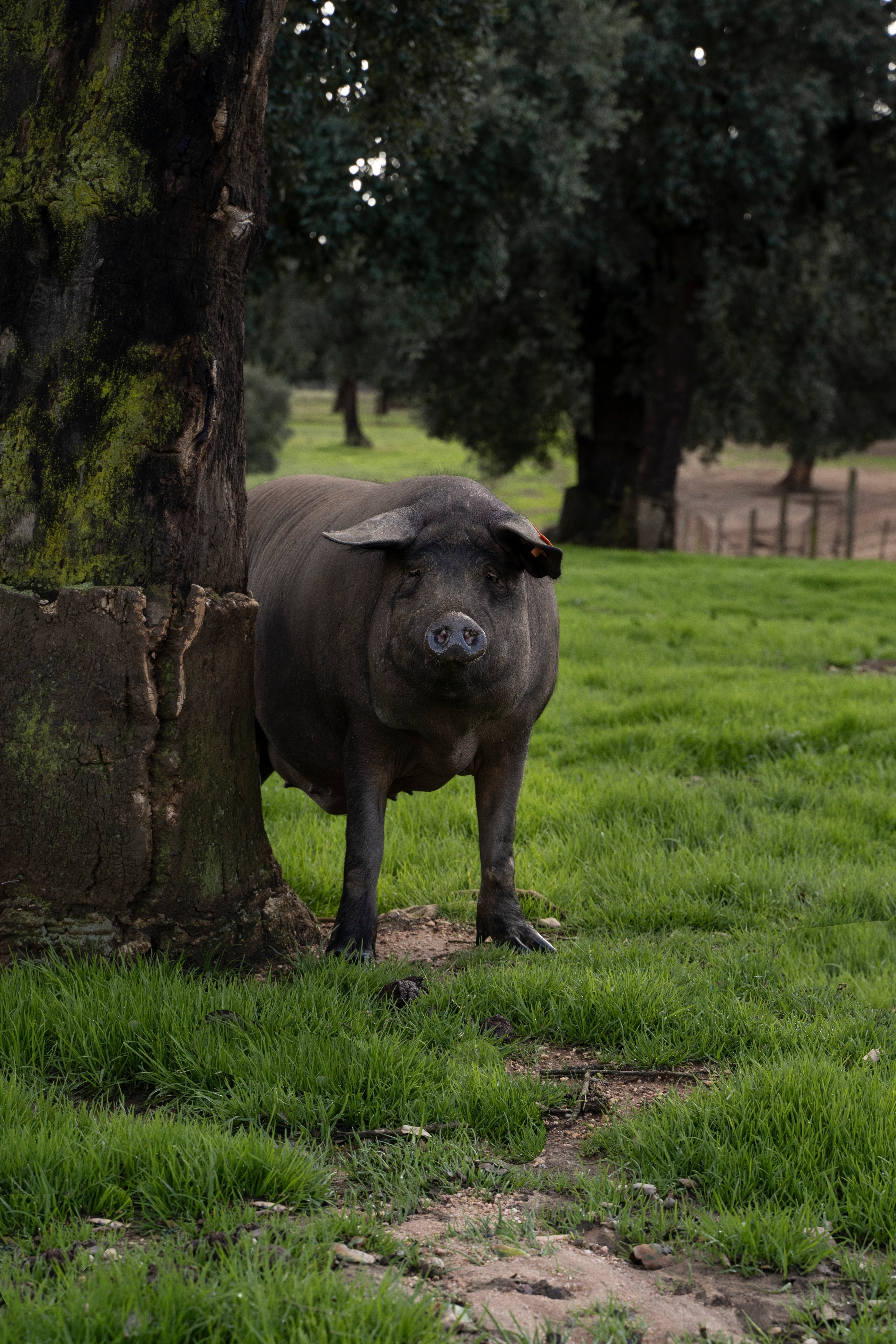
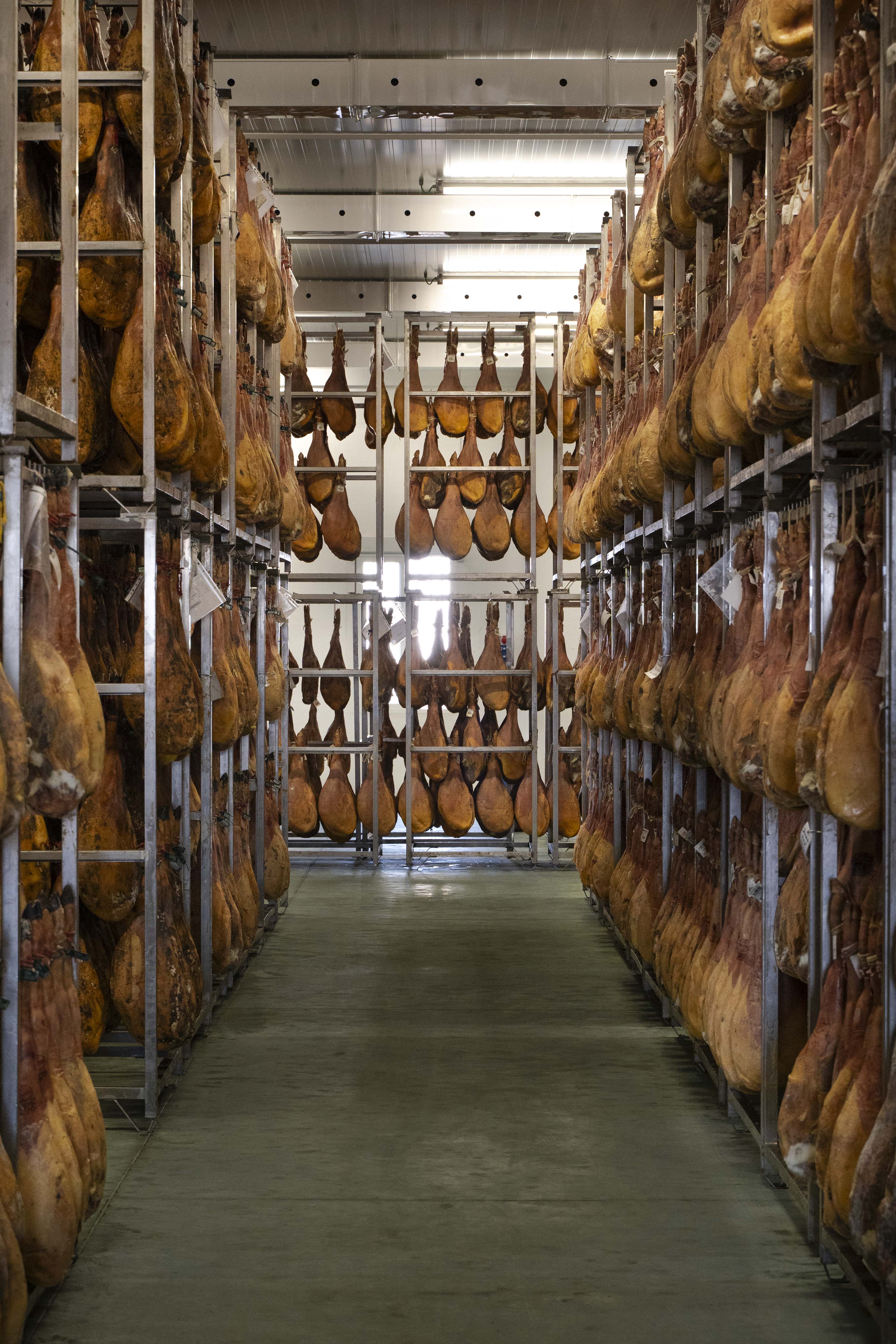
Bodaga naturelles où on voit les jambons lolo en plein affinage

Ibérico, serrano and seals: how to read a ham label

On a Spanish ham label, almost everything is regulated: the breed, the diet, the colour of the seal, the curing time, even the order of the words. The problem is not a lack of information. It is that the information is written in a language nobody explains. Here is how to read it.

The short answer

Ibérico and serrano are not two levels of quality but two different standards. Ibérico falls under Royal Decree 4/2014, which governs breed, diet and time. Serrano is a European Traditional Speciality Guaranteed, which sets neither breed nor diet.

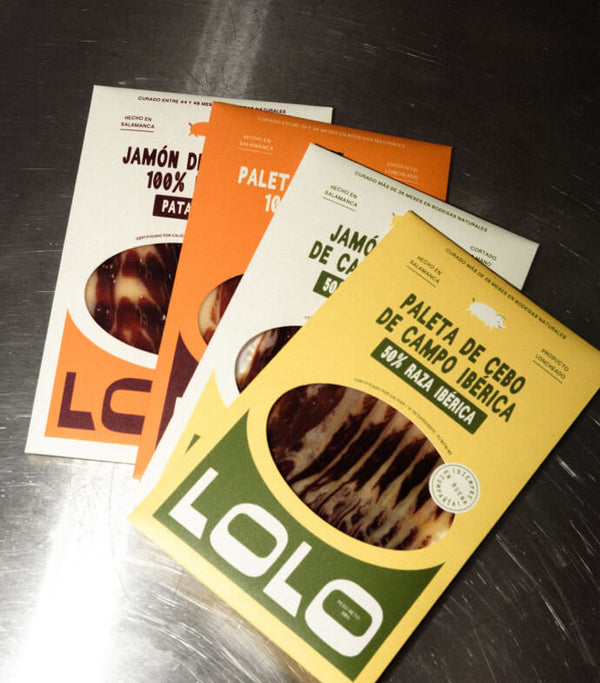
  • A red seal means 50% or 75% Ibérico breed. Both exist, and the exact percentage must appear on the label.
  • The only crossbreeding allowed is with Duroc. The mother is always 100% Ibérico: the outside blood comes through the father.
  • The seal is fitted at the slaughterhouse, cannot be tampered with, and carries an individual number for each piece.
  • An Ibérico ham of 7 kg or more must cure for 730 days. A serrano, 210. These are two different products, not two tiers of one.

Where these figures come from

Everything on the Ibérico side comes from Royal Decree 4/2014, in the consolidated text published in the Boletín Oficial del Estado. We reread it on 23 August 2026: articles 3, 4, 6, 7, 8, 9 and 12. For serrano, the source is the official Traditional Speciality Guaranteed entry published by the Spanish Ministry of Agriculture, which refers to European regulation 1204/2008.

One point of honesty: we sell Ibérico ham and we do not sell serrano. You should know that when reading an article that compares the two. It is also why we name no brands and stick to the texts.

Ibérico and serrano: two standards, not two tiers

Serrano is often presented as a budget Ibérico. That is a category error. The two products fall under different texts, and those texts do not measure the same things.

One detail is worth flagging, because it contradicts what you read everywhere. The serrano specification imposes no breed: it asks only for healthy pigs, “cerdos sanos”. It sets a minimum weight for the piece and a curing time, and nothing more. In practice serrano is made from white pigs, but that is custom rather than rule.

Spain voted to cancel the designation in December 2021. The High Court of Justice of Madrid overturned that decision on 28 November 2025, and the administration revoked it by a resolution of 10 July 2026: the procedure has started again from scratch, and the name remains in force.

CriterionIbérico hamSerrano ham
Governing textRoyal Decree 4/2014, Spanish standardTraditional Speciality Guaranteed, EU regulation 1204/2008
Breed50% Ibérico minimum, Duroc crossing onlyNo breed imposed, only “cerdos sanos”
DietThree regulated categories, from montanera to indoor rearingNot regulated
Minimum curing730 days for a ham of 7 kg or more210 days from the start of salting
Weight of the pieceSets the threshold for curing time9.5 kg minimum with trotter, 9.2 kg without

Sources: Royal Decree 4/2014, consolidated text; TSG “Jamón Serrano” entry, Spanish Ministry of Agriculture. Consulted 23 August 2026.

The four seals, and what each one guarantees

The seal is the coloured plastic tie fixed around the shank. It is fitted at the slaughterhouse rather than at the point of sale, it cannot be tampered with, and it carries a unique number identifying the piece. The Ibérico pig trade body assigns it and an independent inspection body verifies it. On a label, it is the only element the seller cannot write themselves.

SealBreedRearing
Black
de bellota 100% ibérico
100% Ibérico, both parents in the herd bookMontanera: acorns, free-range
Red
de bellota ibérico
50% or 75% Ibérico, Duroc crossMontanera: acorns, free-range
Green
de cebo de campo ibérico
From 50% to 100% IbéricoOutdoors, 100 m² per animal
White
de cebo ibérico
From 50% to 100% IbéricoIndoors, 2 m² per animal

Royal Decree 4/2014, art. 6 to 9. Space requirements apply to animals over 110 kg live weight.

The most common mistake

You will very often read that the red seal means “75% Ibérico”. That is incomplete. The decree sets the threshold at 50%, and both percentages sit under the same seal. Two red-seal hams may share neither genetics nor price. The exact percentage is compulsory on the label: that is what to look for, not the colour on its own.

Where 100%, 75% and 50% actually come from

These figures are not marketing estimates. They describe a precise pedigree, set out in article 3 of the decree, and only one outside breed is permitted: Duroc.

A 100% Ibérico animal has two purebred Ibérico parents, both registered in the official herd book. A 75% animal is born to a 100% Ibérico mother and a father who himself comes from a 100% Ibérico mother and a Duroc father. A 50% animal is born to a 100% Ibérico mother and a 100% Duroc father.

One thing runs through all three cases: the mother is always 100% Ibérico. Outside blood only ever comes through the father. It is a simple rule to hold on to, and it explains why no 25% or 12.5% Ibérico exists on the Spanish market.

Black seal

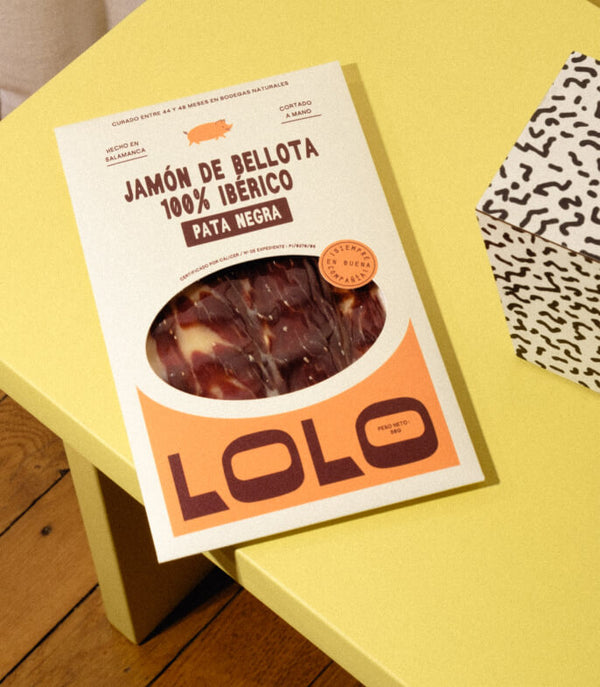
The one case where “Pata Negra” is earned, at €24.90

80 g hand-carved, 100% Ibérico acorn-fed, Salamanca dehesa, cured 44 to 48 months.

See the piece  →

Shipped from Spain · free shipping over €89.90

What the label must say, and in what order

The decree requires a sales name built from three parts, always in the same order: the type of product, then the diet, then the breed. That gives “jamón de bellota 100% ibérico”, or “paleta de cebo de campo ibérico”.

Two rules complete that order. First, the breed percentage must appear in the form “% raza ibérica”. Second, using the sales name incompletely, or isolating one of its terms, is prohibited. A piece advertised simply as “Ibérico”, with no diet and no percentage, does not comply.

That leaves curing time, which is not always shown but is also imposed by the decree. A ham of 7 kg or more must cure for 730 days, a lighter one for 600, a shoulder for 365 and a loin for 70. These are floors, not targets: our own acorn-fed pieces come out between 44 and 48 months.

Four habits in front of a label

  • Look for the full sales name, in three parts. If the diet or the breed is missing, so is the information.
  • Read the percentage, not just the colour. A red seal at 75% and a red seal at 50% are not the same piece.
  • Check that the seal carries a number. It is fitted at the slaughterhouse and can be neither removed nor replaced.
  • Do not treat serrano as entry-level Ibérico. They are two separate standards, with requirements that bear on different things.

Conclusion

The label says everything, once you know where to look

Royal Decree 4/2014 was written to end a market in which everyone named their products as they pleased. On substance, it worked. What it did not do was make its own vocabulary legible to the person buying.

Three steps are enough to find your way.

  1. Look at the colour of the seal. It gives you the diet in a second, and diet is what weighs most on flavour.
  2. Then find the breed percentage. It is what separates two pieces carrying the same seal.
  3. Finally compare the price per kilo, never the price of the pack. It is the only unit that lets you weigh an 80 g pack against an 8 kg leg.

Frequently asked questions

What is the difference between serrano ham and Ibérico ham?

They are two different standards. Ibérico falls under Royal Decree 4/2014, which requires at least 50% Ibérico breed, a defined feeding category and at least 600 days of curing. Serrano is a European Traditional Speciality Guaranteed, setting a minimum weight for the piece and 210 days of curing, and saying nothing about breed or diet.

Does a red seal mean 75% Ibérico?

Not necessarily. The red seal designates a ham “de bellota ibérico”, meaning an animal fed on acorns in montanera but born of a cross. That cross can give 50% or 75% Ibérico breed. The exact percentage must appear on the label.

Which breed is the Ibérico pig crossed with?

With Duroc, and only Duroc. Article 3 of the decree permits no other breed. The mother is always 100% Ibérico and registered in the herd book; the father brings the Duroc blood, over one or two generations depending on whether 50% or 75% is the target.

Can you trust the words “Pata Negra”?

It is not a regulated term, so it commits no one. It should apply only to the black seal, the decree’s sole “100% ibérico de bellota” designation. You will nonetheless see it on red-seal and sometimes green-seal pieces. The seal, by contrast, does not lie.

Who fits the seal, and who checks it?

It is assigned by the Ibérico pig trade body and fitted at the slaughterhouse, before anything else. It cannot be tampered with and carries an individual number unique to the piece. An independent inspection body verifies compliance. That is what sets it apart from everything else printed on the packaging.

Sources

  • Royal Decree 4/2014, consolidated text published in the Boletín Oficial del Estado: art. 3 (sales name, breed percentages, Duroc crossing), art. 4 (labelling and the “% raza ibérica” wording), art. 6 to 8 (montanera, cebo de campo, cebo), art. 9 (seals), art. 12 (minimum curing times). Consulted 23 August 2026.
  • Traditional Speciality Guaranteed “Jamón Serrano”, Spanish Ministry of Agriculture entry referring to regulation (EC) 1204/2008: 210 days of curing from the start of salting, minimum weight 9.5 kg with trotter and 9.2 kg without, no breed imposed, only “cerdos sanos”. Consulted 23 August 2026.
  • Resolution of 10 July 2026, published in the Boletín Oficial del Estado: it sets aside both resolutions of 21 December 2021, the one cancelling the TSG “Jamón Serrano” and the one continuing the registration of a homonymous PGI, and orders the procedure to be reopened.

Read next

Written by

Valentin and Pablo, founders of LOLO Jamón

Valentin & Pablo

Founders of LOLO Jamón

We select our pieces in the drying cellars of the Salamanca dehesa, and we filmed a full montanera season for our documentary Viva España.

Pieces whose label holds up

Acorn-fed 100% Ibérico hams and shoulders, black seal, Salamanca dehesa, cured 32 to 48 months depending on the piece.

Explore the Bellota selection

Shipped from Spain · free shipping over €89.90

Leave a comment

This site is protected by hCaptcha and the hCaptcha Privacy Policy and Terms of Service apply.