


Article: What are the producing regions and the origin of Iberian ham?
What are the producing regions and the origin of Iberian ham?
The Spanish gastronomic legacy
A millennia-old tradition anchored in the Iberian Peninsula
Iberian ham represents much more than a simple gastronomic product. It is the reflection of Spain's culinary soul, with a history that dates back several millennia. Already in Roman times, legionaries highlighted the exceptional quality of the hams produced by local populations.
This know-how has been passed down from generation to generation, perfected over the centuries. The techniques for raising the Iberian pig and curing the ham have endured despite the multiple invasions and political changes of the peninsula. This historical continuity makes Iberian ham an exceptional product, carrying a strong cultural identity.
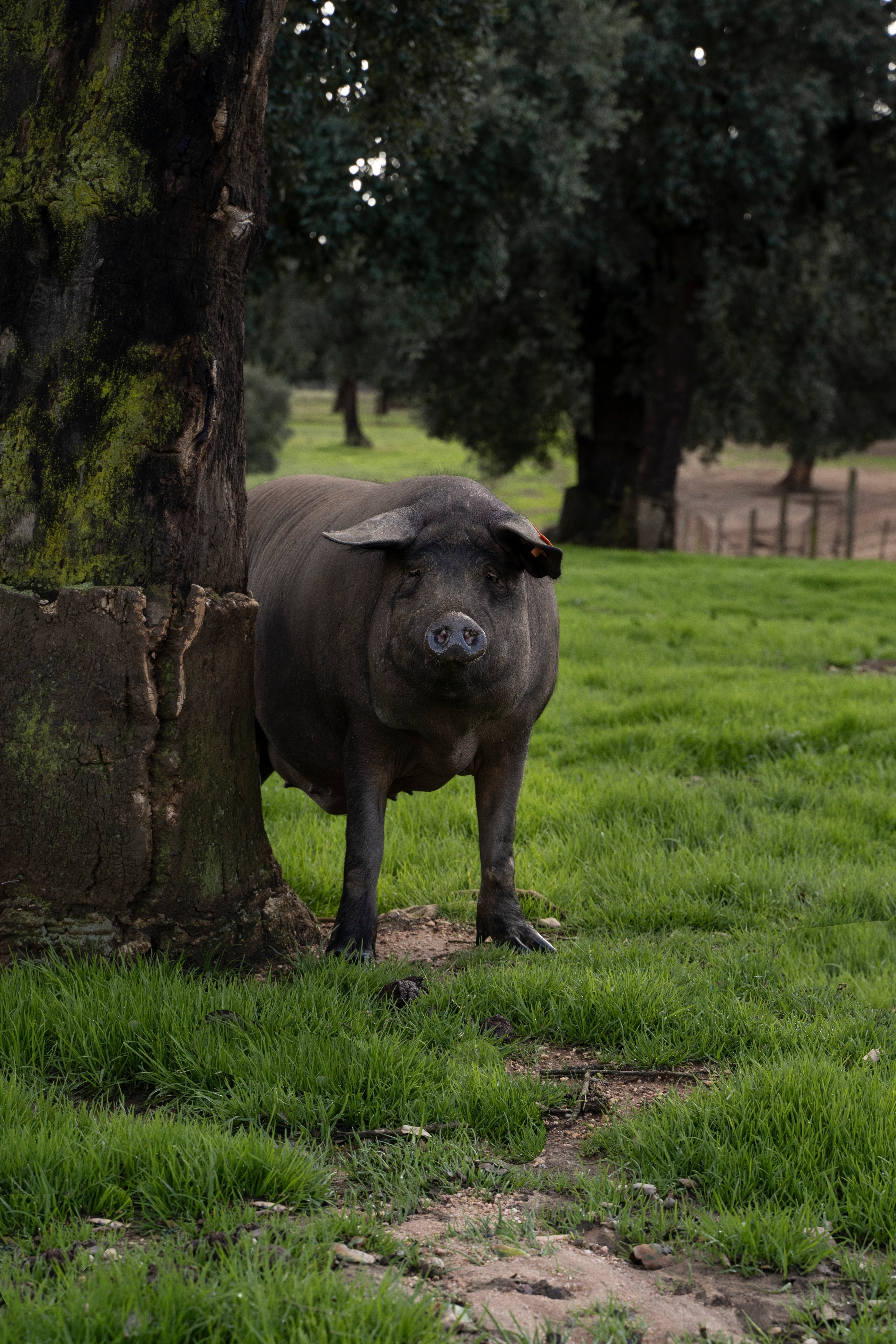
What makes Iberian ham unique is its inseparable link with the Iberian breed pig, an animal recognizable by its black coat and thin legs, and the only one capable of offering that marbled meat with incomparable aromas.
The Iberian pig, a unique breed in the world
A genetic treasure of the peninsula
The Iberian pig, also called "pata negra," is an indigenous breed of the Iberian Peninsula. This ancient breed possesses unique genetic characteristics that distinguish it from other pig species.
Its main particularity is its ability to infiltrate fat into the muscles, creating marbled meat of exceptional tenderness. This quality is reinforced by its extensive rearing, where the animal can move freely in large natural spaces.
The breeding cycle of the Iberian pig is marked by the seasons, with a crucial phase called "montanera." During this period, in autumn and winter, 100% acorn-fed Iberian pigs feed mainly on acorns fallen from the cork and holm oaks of the dehesas, typical agroforestry ecosystems of southwestern Spain.
This specific diet gives Iberian ham its characteristic flavor and unctuous texture. The richness in unsaturated fatty acids from the acorns literally transforms the composition of the meat, giving it a unique taste and special nutritional properties.
Producing regions and their specificities
Protected Designations of Origin (PDOs)
Spain currently has four PDOs for Iberian ham, each corresponding to a region with particular geographical, climatic, and technical characteristics.
These PDOs guarantee not only the origin of the product, but also respect for traditional methods. They are an official guarantee of excellence and typicity. Each PDO has a strict set of conditions that regulate all stages, from pig rearing to the final ham curing.
Jamón de Jabugo: the excellence of the Sierra de Aracena
The region of Jabugo, in the province of Huelva (Andalusia), enjoys a legendary reputation. Its PDO, formerly known as "Jamón de Huelva," was renamed "Jamón de Jabugo" in 2017.
Located about 600 meters above sea level, Jabugo has a perfect microclimate: cold winters, mild summers, and constant humidity, allowing for slow and homogeneous curing.
The dehesas in the area are populated by holm oaks and cork oaks that produce especially flavorful acorns. The result: hams with complex aromas, characteristic sweetness, and an unparalleled texture.
Los Pedroches: Córdoba's hidden treasure
Less known internationally but highly appreciated among connoisseurs, the "Los Pedroches" PDO is located north of the province of Córdoba. With more than 300,000 hectares of dehesa, it is one of the largest continuous areas in Europe.
The continental climate, with cold winters and intense summers, favors slow maturation and the development of potent aromas.
Los Pedroches hams are recognized for their intense flavor, deep red color, and a characteristic saline point, with notes that evoke the aromatic herbs of the area.
Dehesa de Extremadura: the wild immensity
Extremadura is home to the largest extension of dehesas in all of Spain, with almost a million hectares. The "Dehesa de Extremadura" PDO covers the provinces of Cáceres and Badajoz, where Iberian pig farming is a key economic and cultural activity.
The Mediterranean continental climate, with strong thermal variations, favors meat that is balanced between sweetness and intensity. These hams often present notes of forest and natural spices, a result of a varied diet.
Guijuelo: the jewel of Salamanca
Located in the province of Salamanca, the "Guijuelo" PDO is the oldest of the four, officially recognized in 1986. Situated on the Castilian plateau at 1,000 meters of altitude, its rigorous climate with long and cold winters is ideal for the first stages of curing.
Guijuelo hams are characterized by prolonged maturation, sometimes up to 48 months, which gives them an exceptional aromatic complexity and a particularly melting texture.
The production process and classifications
From breeding to plate: a journey of excellence
The production of Iberian ham is a demanding process that begins long before the animal is slaughtered. It all starts with genetic selection, with purebred Iberian pigs or those crossed with Duroc under strict criteria.
Extensive rearing is essential: at least 1 hectare per animal. This freedom allows for adequate muscle development and good fat infiltration.
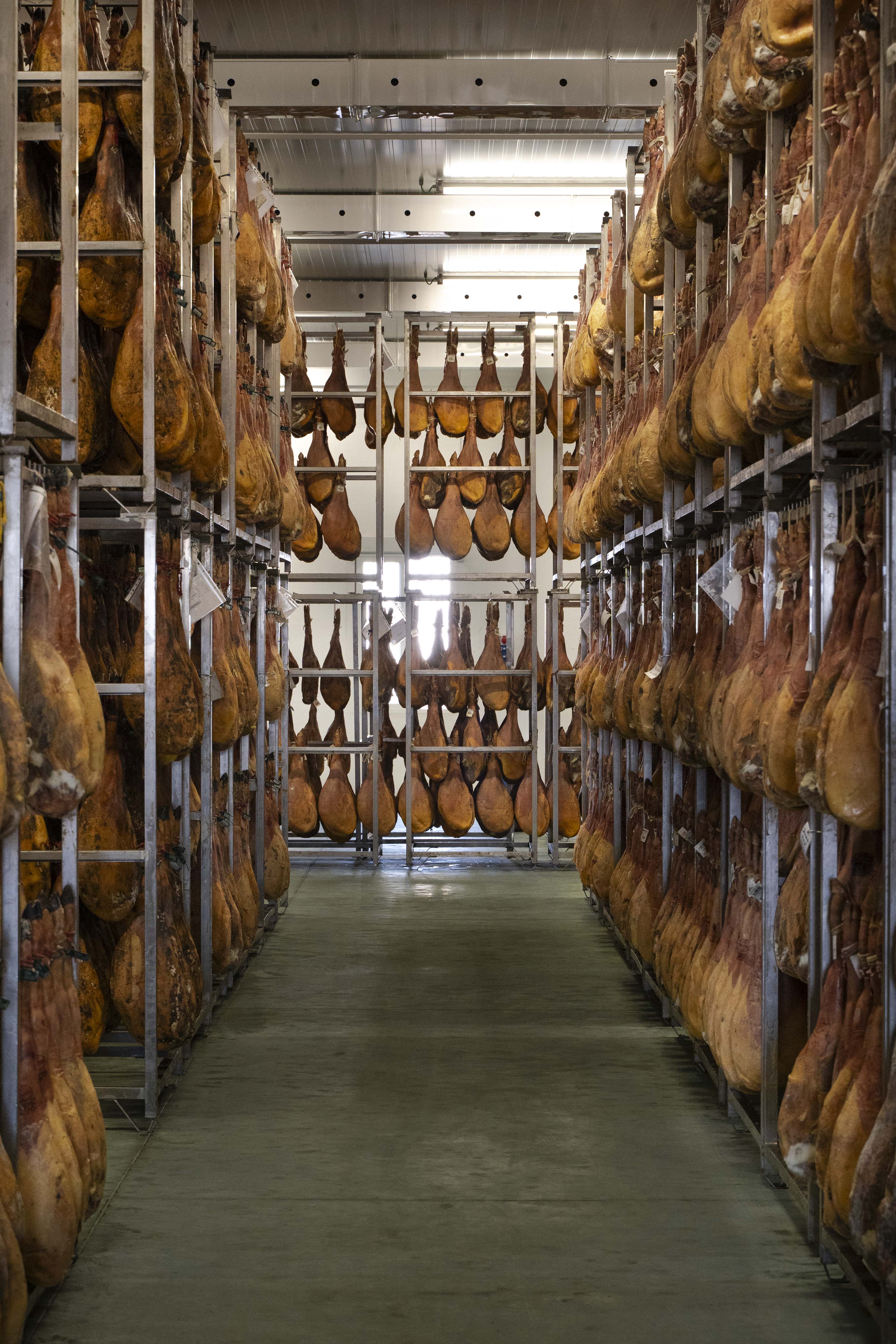
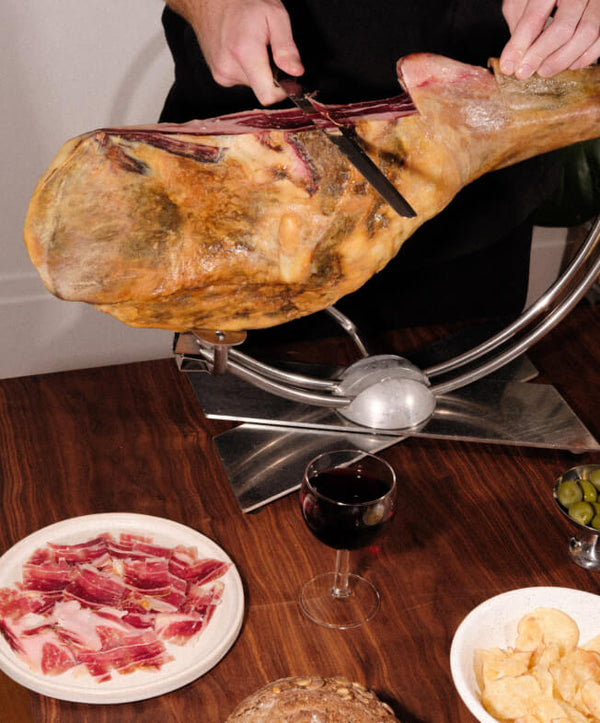
After slaughter, the hams are salted with sea salt for approximately one day per kilo of meat. Then, they rest for the salt to slowly penetrate, followed by natural drying, regulated only by opening windows.
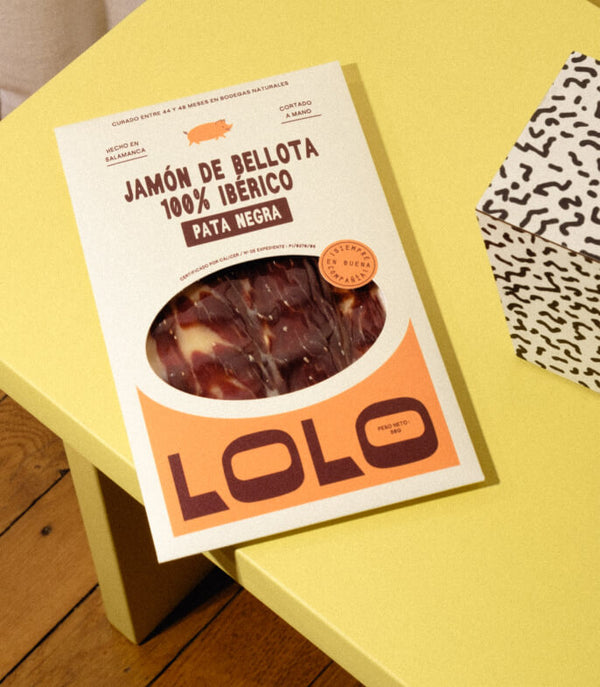
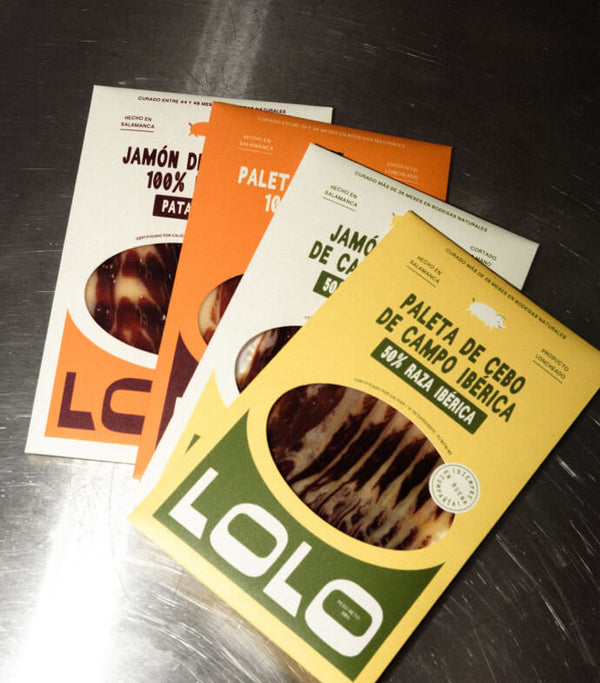
The final stage, maturation in the cellar, is crucial. It lasts between 18 and 36 months or more, as with LOLO Iberian hams, where the complex aromas that make Iberian ham a gastronomic jewel develop.
Official categories
Spain has established a classification system based on two criteria: breed and diet. The categories are identified by colors:
- Black: 100% Acorn-fed Iberian
- Red: Acorn-fed Iberian
- Green: Free-range Cebo
- White: Cebo
Although complex, this system guarantees transparency and allows consumers to know exactly what they are buying.

Leave a comment
This site is protected by hCaptcha and the hCaptcha Privacy Policy and Terms of Service apply.