


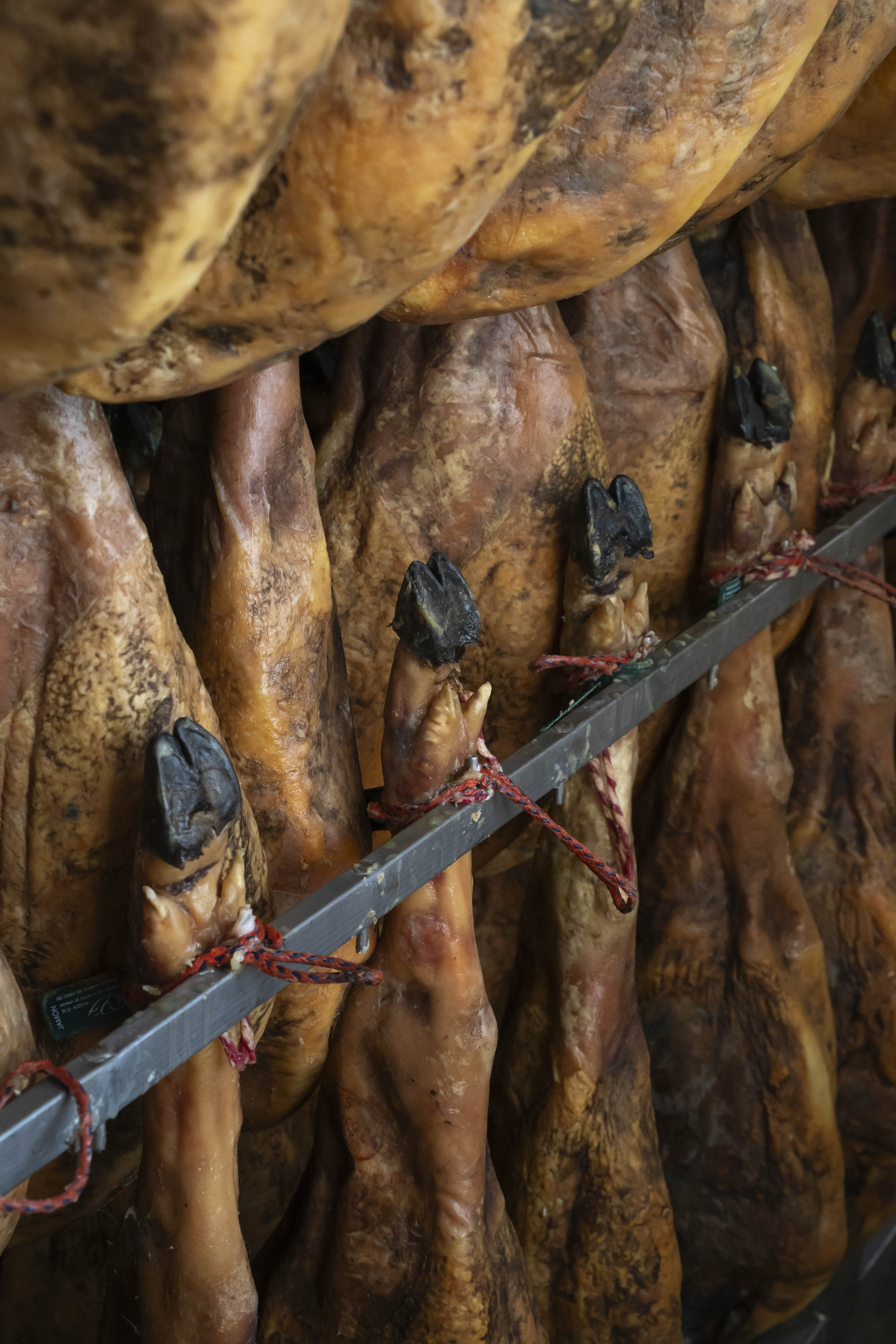
Ham or Shoulder: Which to choose?
The complete guide to their differences (Flavor, Size, Yield)
Ibérico ham and ibérico pork shoulder are two essential treasures of Spanish gastronomy, often confused by ham lovers. However, these two exceptional cuts have distinct characteristics that directly influence their flavor, texture, and use.
Whether you want to make an informed purchase, organize a tasting, or simply satisfy your culinary curiosity, this detailed guide will reveal all the differences between ham and pork shoulder to help you make the best decision according to your tastes and needs.
The anatomical origin: the fundamental difference
Ham: the nobility of the hind leg
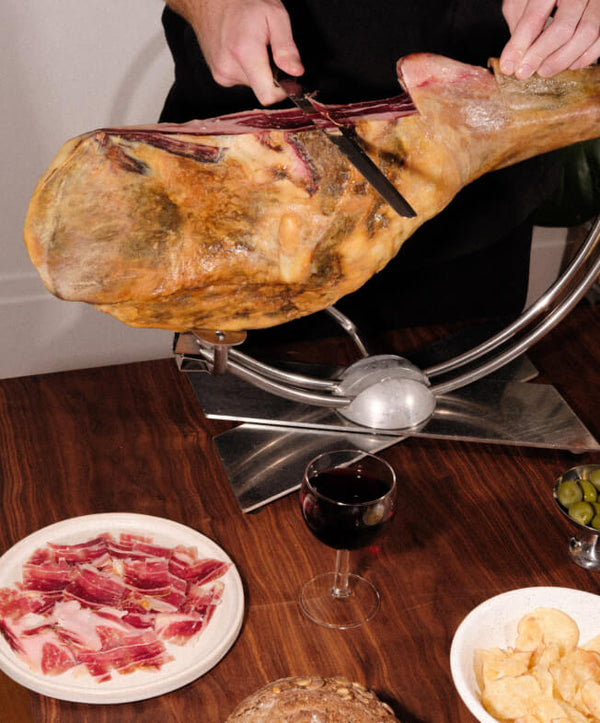
Ibérico ham comes from the hind leg of the pig, meaning the leg. This part, naturally more developed and meaty, constitutes the reference piece of ibérico ham. Its anatomical position gives it dense musculature and harmonious fat infiltration, key factors that determine its organoleptic qualities.
Pork Shoulder: the authenticity of the shoulder
Ibérico pork shoulder comes from the front leg of the pig, corresponding to the shoulder. Being more involved in the animal's daily muscular activity, it presents a more complex structure due to the presence of the scapula. This particularity gives it a unique flavor profile and an easily recognizable shape.
Size, weight, and shape: clear visual cues
Ham: the elegance of special occasions
Ibérico ham is immediately distinguished by its imposing dimensions:
- Weight: Generally between 7 and 9 kg, making it the largest piece in the world of ham.
- Size: Longer and wider than the shoulder, with generous proportions ideal for large celebrations.
- Shape: Its elongated and contoured silhouette facilitates slicing and allows for large, regular slices.
Pork Shoulder: conviviality in family format
Ibérico pork shoulder has more modest but equally attractive characteristics:
- Weight: Between 4 and 6 kg, approximately half the size of a ham, perfect for family consumption.
- Size: Shorter and thinner, it adapts better to smaller storage spaces.
- Shape: The presence of the scapula makes it flatter and gives it a characteristic asymmetrical shape.
Flavor and texture: a matter of palate
Ham: the complexity of refined flavors
The flavor of ibérico ham is characterized by a remarkably fine aromatic palette. Its sweet and complex nuances develop progressively in the mouth, revealing different notes depending on the cutting area. The homogeneous texture and infiltrated fat create juicy and melting slices.
This complexity is due to a prolonged curing process of 24 to 48 months, which allows the aromas to evolve and gain in subtlety.
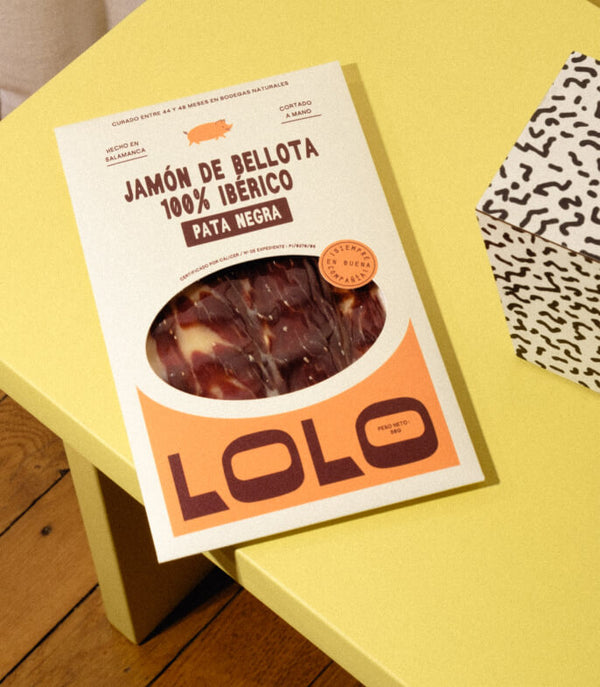
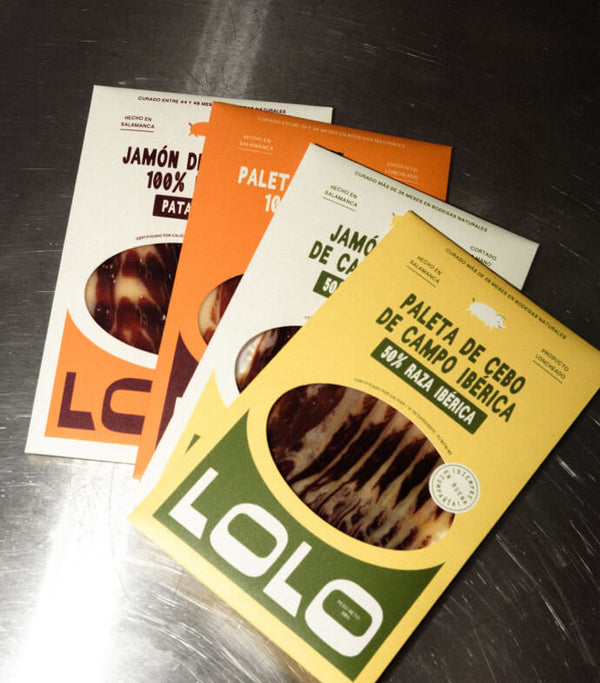
💡 To note: At LOLO, our hams are cured in natural cellars: 36 months for Cebo de Campo and between 44 and 48 months for Bellota.
Pork Shoulder: the intensity of a pronounced character
The flavor of ibérico pork shoulder stands out for its intensity and straightforwardness. Its more powerful and direct notes are perceived from the first bite, offering a more immediate taste experience. The proximity to the bone and its higher fat concentration give it an unmistakable character.
Its shorter curing, between 12 and 24 months, preserves this natural intensity and develops the typical aromas of ibérico ham.
💡 To note: At LOLO, our pork shoulders are cured in natural cellars: 28 months for Cebo de Campo and between 32 and 36 months for Bellota.
Yield and slicing: a practical and economic criterion
Ham: the efficiency of high yield
The yield of ham is one of its great advantages. With around 40% to 50% usable meat, it offers an excellent quality-to-quantity ratio. Its regular shape and fewer bones make slicing easier, allowing for large and homogeneous slices.
For this reason, it is preferred by restaurants, caterers, and professionals looking for impeccable presentation.
Pork Shoulder: the technique of artisanal slicing
The yield of pork shoulder is naturally lower, between 30% and 40% usable meat. This is mainly due to the size of the scapula.
Slicing pork shoulder requires more technique and experience due to its bone structure. This challenge is appreciated by professional slicers, who see it as the perfect occasion to demonstrate their mastery.
Price: a different budget
For the same quality (breed, diet, rearing), ibérico pork shoulder is usually more affordable than ham. This is explained by its lower weight and shorter curing time.
Thanks to this, the pork shoulder represents an excellent gateway to the world of ibérico ham without sacrificing quality.
Comparison table: Ham vs. Pork Shoulder
| Criterion | Ham (Hind leg) | Pork Shoulder (Front leg) |
|---|---|---|
| Part of the pig | Hind leg | Front leg |
| Average weight | 7 - 9 kg | 4 - 6 kg |
| Flavor | Sweet, complex, nuanced | Intense, powerful, direct |
| Curing | 24 - 48 months (Between 36 and 48 months at LOLO) | 12 - 24 months (Between 28 and 36 months at LOLO) |
| Yield | High (40-50%) | Lower (30-40%) |
| Slicing | Easier | More technical |
| Price | Higher | More economical |
So, Ham or Pork Shoulder, which to choose?
For big celebrations and events
Ibérico ham stands out as the prestigious choice. Its size, yield, and complex flavors make it the perfect ally for weddings, parties, and corporate events where presentation is as important as flavor.
For family consumption or initiation
Ibérico pork shoulder is the ideal option for households wishing to enter the world of ibérico ham. Its smaller format, accessible price, and intense flavor make it perfect for sharing with family or friends.
The decisive criterion: always quality
Beyond choosing between ham or pork shoulder, remember that quality always trumps size. An acorn-fed ibérico pork shoulder can easily outperform a lower quality industrial ham. The breed of the pig, its diet, curing time, and the producer's expertise are the true seals of guarantee.
Whether for the subtlety of ibérico ham or the intensity of ibérico pork shoulder, the essential thing is to opt for an authentic product that honors this centuries-old tradition of Spanish gastronomy.

%0AIb%C3%A9rico%20ham%20and%20ib%C3%A9rico%20pork%20shoulder%20are%20two%20essential%20treasures%20of%20Spanish%20gastronomy,%20often%20confused%20by%20ham%20lovers.%20However,%20these%20t...)
Leave a comment
This site is protected by hCaptcha and the hCaptcha Privacy Policy and Terms of Service apply.