




The maestro cortador, an official course since 2026 and a title nobody protects
Contents
The maestro cortador de jamón, Spain's master jamón carver, has just entered Spanish law. A decree of February 2026 creates a 300-hour course, sets a cutting angle and describes a workstation. Then it states that it protects no job title, and leaves everything else to the trade.
The short answer
Since 4 March 2026, Spain has had an official course in carving and tasting cured ham. The same decree says in plain words that it regulates no profession, so anyone may still call themselves a maestro cortador.
- The course lasts 300 hours at level 4C of the Spanish qualifications framework, with two modules of 75 hours each (Royal Decree 84/2026, article 2 and annex I).
- Entry asks for one of three Spanish vocational titles, in cookery, restaurant service or food retailing.
- Spanish carving law writes down a single angle, 45°, for the cut below the Achilles tendon.
- Slice thickness, serving temperature and carving order appear nowhere in the decree. The trade sets them.
- The title the national association hands out at its championship is a private one. It sits alongside the official course and never overlaps with it.
Where this information comes from
Everything this article presents as a rule comes from a published text. The main one is Royal Decree 84/2026 of 11 February, published in the Boletín Oficial del Estado on 12 February 2026, which we read article by article. The others are listed at the foot of the page. What we say about the workstation and about sharpening comes from the video further down, where Javier carves one of our pieces.
Three figures that every site publishes, the thickness of a slice, its length and the serving temperature, have no source as serving rules. We say so where each question comes up. One last thing, we sell Iberico ham ourselves, and you should know that before reading on.
What Spain wrote in February 2026
The craft now has its own official course. Royal Decree 84/2026 creates the Curso de especialización de Formación Profesional de Grado Medio en Maestría de corte y cata de jamón y paleta curados, a specialist course in carving and tasting cured jamón and paleta. It runs for 300 hours, belongs to the Hospitality and Tourism vocational family and sits at level 4C of the Spanish qualifications framework. Those who pass it receive a título de especialista, the title Spanish vocational training awards for this kind of course (article 14).
Two modules form its core, at 75 hours each. Module 5158 covers carving and slicing, and module 5159 covers tasting. Article 8 also adds a period of workplace training and gives it no length.
Entry is not open to all. Article 11 asks for one of three Spanish vocational titles, technician in cookery and gastronomy, in restaurant service or in food retailing, or for other conditions the regional education authorities may set. A self-taught cortador, however well regarded by his peers, has no automatic right to a place.
The course did not appear from nowhere. It is the third floor of a building that took four years.
| Year | The text | What it creates |
|---|---|---|
| 2022 | Programme HOTR0014, Spanish public employment service | A 30-hour training speciality, level 1 |
| 2023 | Royal Decree 546/2023, annex XV | The vocational qualification HOT818_2, level 2 |
| 2026 | Royal Decree 84/2026, in force since 4 March | The 300-hour specialist course, level 4C |
The decree sets no date for the first courses, since provision depends on each autonomous community. Nothing guarantees that a single class has been taught yet.
Nobody protects the title
Spain has created a course without creating a regulated trade. The proof fits on one line, in the first additional provision. “El curso de especialización establecido en este real decreto no constituye una regulación del ejercicio de profesión regulada alguna.” In other words, the course does not regulate any profession.
There is no professional body and no register, and nobody needs the title it awards to carve for a living. The word maestría sits in the name of the course and nowhere in a protected job title. If you were hoping for a Spanish version of France's Meilleur Ouvrier de France, this is the wrong text, and the decree makes sure you know it.
Not to be confused
The Asociación Nacional de Cortadores de Jamón, founded in 2006, has run a Spanish championship since 2007, and the winner receives a maestro cortador title.
That title comes from a private association that anyone can join. It has nothing to do with the 2026 course, and nothing would stop another association from handing out the same one.
One more consequence of that status is that nobody counts ham cutters. The national statistics institute publishes no headcount, and neither does the trade body or the ministry. The occupation has no code of its own in the Spanish classification of occupations. The numbers you come across come from job boards and private schools.
The one gesture the law describes
Spanish carving law writes down one angle, and only one, 45°. It sits in module 5158, among the criteria for trimming the piece before knife carving, as “el corte por debajo del tendón de Aquiles, en ángulo de 45° hasta llegar a tocar la tibia y peroné”. The cut goes in below the Achilles tendon at 45° until the blade touches the tibia and fibula. It opens the piece, and everything after depends on it.
The same module describes the cala, the bone needle a carver pushes into the piece to smell it. The decree gives the usual places for it, such as the joint between the hip bone and the femur, the jarrete and the lower part of the punta. Each one is a chance to catch a fault before the ham reaches a plate.
What the decree does not impose is a carving order. It asks for slicing “de forma lineal”, in straight lines around the bones, and for the piece to be used to the full by rotating it. It also wants slices kept apart by the zone they come from. For the opening, it lists what the carver must weigh, the kind of service, how the ham will be eaten, the timing and the conditions in the room among them. Which face comes first is left to the carver.
The decree names the bones in anatomical terms, and the zones only by their most common names. We describe those zones, and the face to start on, in our guide to the parts of Iberico ham.
Three figures everyone repeats
Every website repeats them, so we went looking for where they came from.
| What you read | What is written | Where |
|---|---|---|
| Slices of 0.5 to 1 mm | No serving rule. A guide recommends an average of 1 to 1.5 mm, to prepare tasting samples | IRTA sensory evaluation guide |
| Slices 4 to 6 cm long | Nothing. No text or contest rule mentions it | No source found |
| Serve at 20 to 24 °C | No rule. The same guide leaves samples at a room temperature of 20 to 25 °C for 20 to 30 minutes | IRTA sensory evaluation guide |
The guide exists to prepare samples for a tasting panel, not to serve ham at the table. It is a voluntary reference, and it says itself that each producer may follow another method.
There are two more figures we won't give you. The first is how long a professional takes to carve a whole piece. The only duration we found written down is a contest ceiling of two hours. The second is the share of a ham you can actually eat. No public body publishes it, and the percentages you read online come with no source.
Conclusion
Knife, machine, and what you really look at
The official Spanish programme gives machine slicing a block of its own, at the same rank as knife carving. Module 5158 devotes its fifth learning outcome to it, with its own criteria. It starts with boning, the hip bone taken out with a boning knife and then the femur with a gouge, because a slicer only takes a boned piece. A qualified cortador is assessed on both techniques.
This sits awkwardly with the way the trade sells hand carving, our own shop included. No study we know of puts the knife ahead of the machine, and we go through what has and has not been measured in our comparison of vacuum packed Iberico ham and ham carved to order. Our preference for the knife rests on what we see and what we like, an irregular slice and a piece we follow from the first cut down to the bone. It is a craft choice, not an established fact, and we won't present it as anything else.
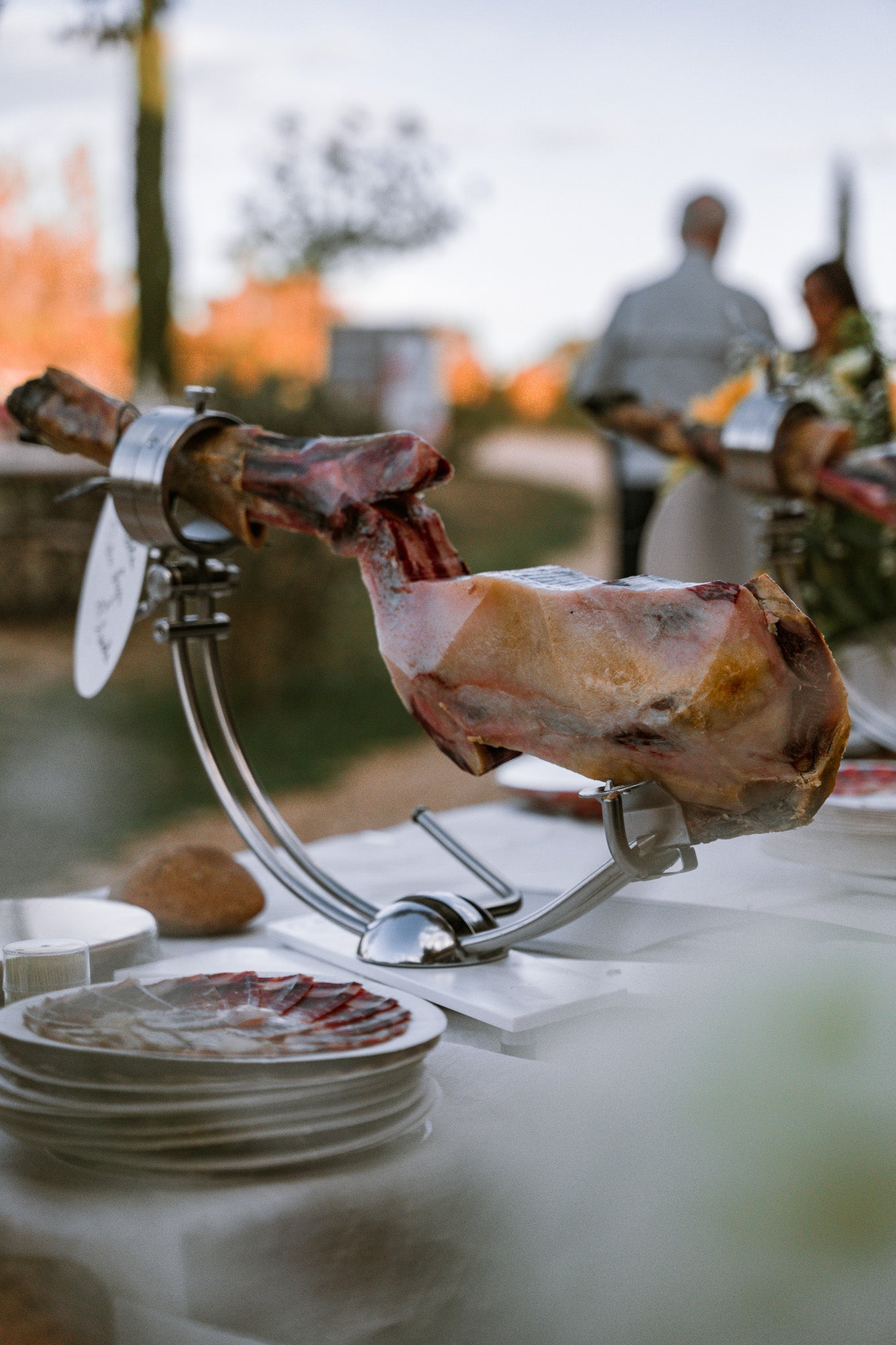
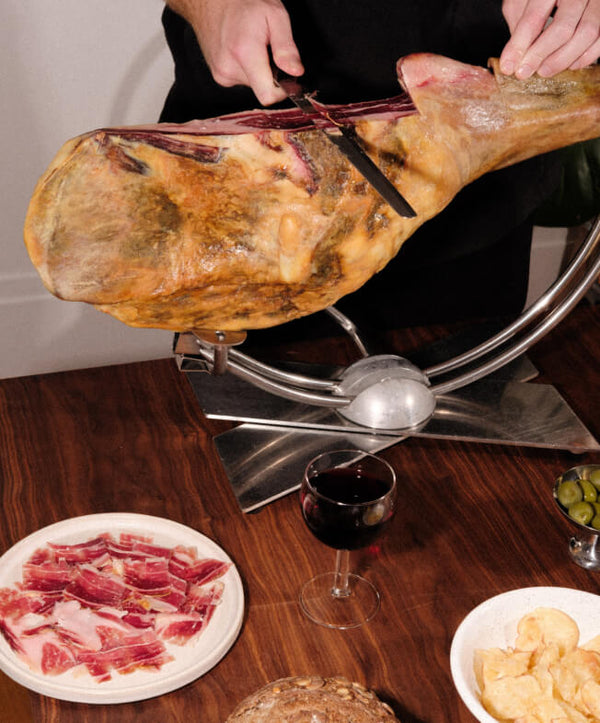
The decree describes a workstation before it describes a single cut, and that order means something. The same module wants the tools in place and within reach before work starts. It lists knives, steel, tongs, stand, protective glove, cleaning cloths and a waste container, and it wants the blades sharpened beforehand. In the video, Javier sharpens before service and never during it.
The stand matters as much as the knife. It allows the rotation the decree asks for, and so the full use of the piece. A ham you cannot turn ends up partly wasted. We go through choosing a stand and a knife in our guide on how to choose Iberico ham.
The last part of the module comes as a surprise. It deals only with hygiene and traceability, with leftovers packed in food-grade bags or containers and labelled, and tools disinfected. It is the least showy part of the craft, and the one that separates a professional from a gifted amateur. At home, keeping a started piece in good shape is covered in how to store Iberico ham.
Taste it yourself
Products mentioned in this article
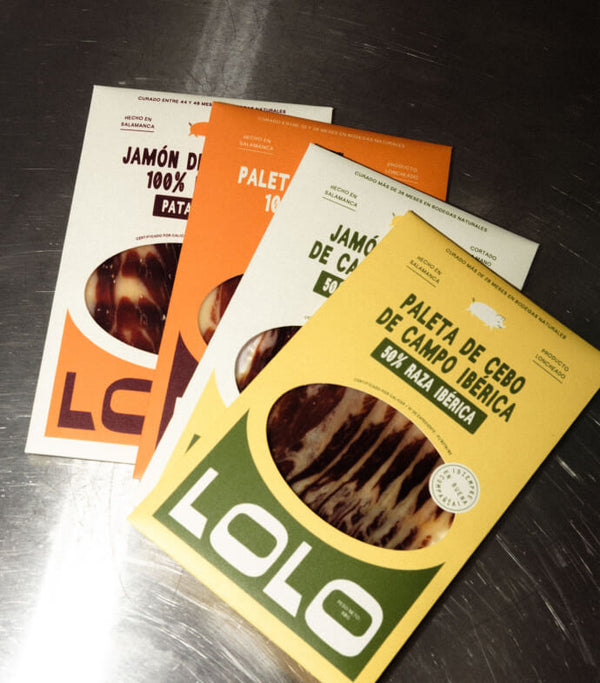
Shipped within 48 h from Salamanca · Free shipping from €89.90
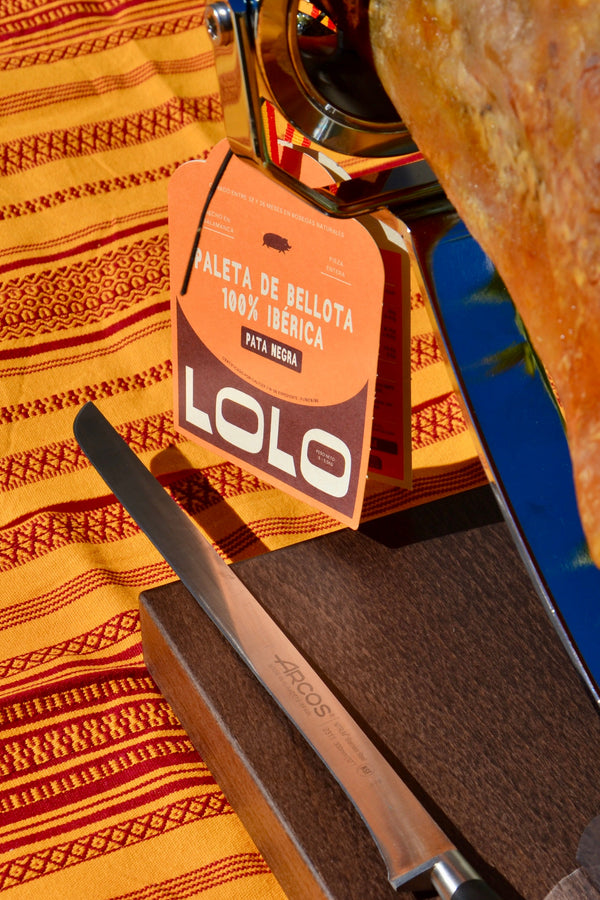
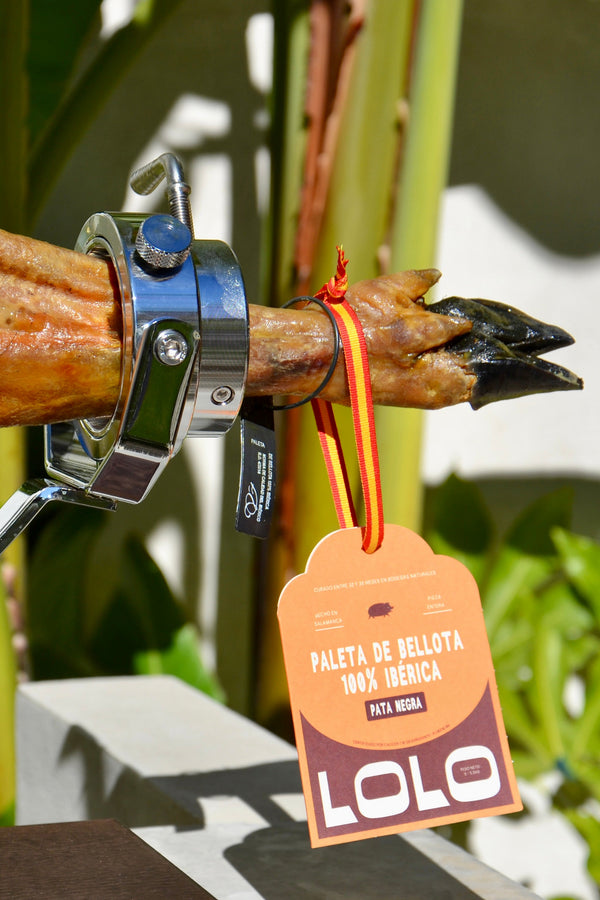
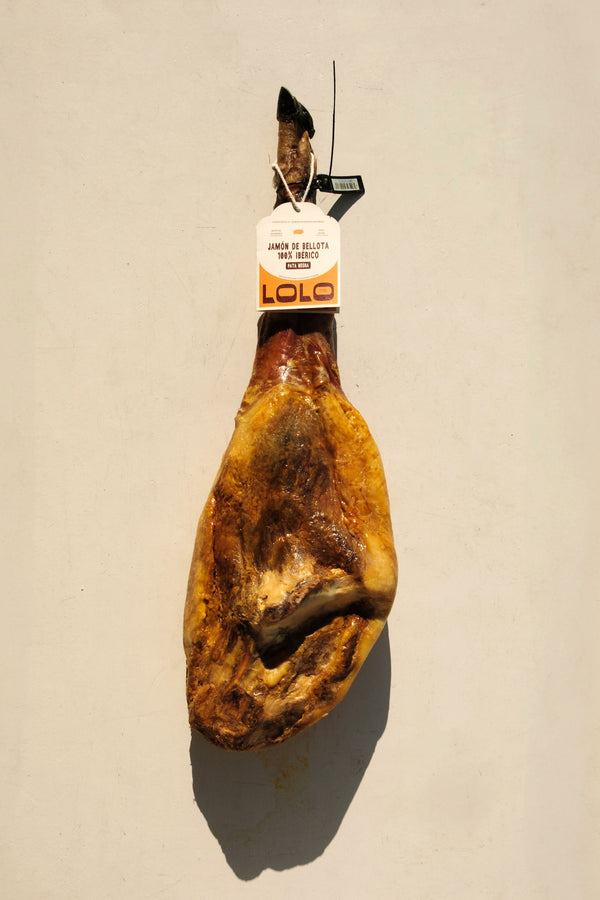
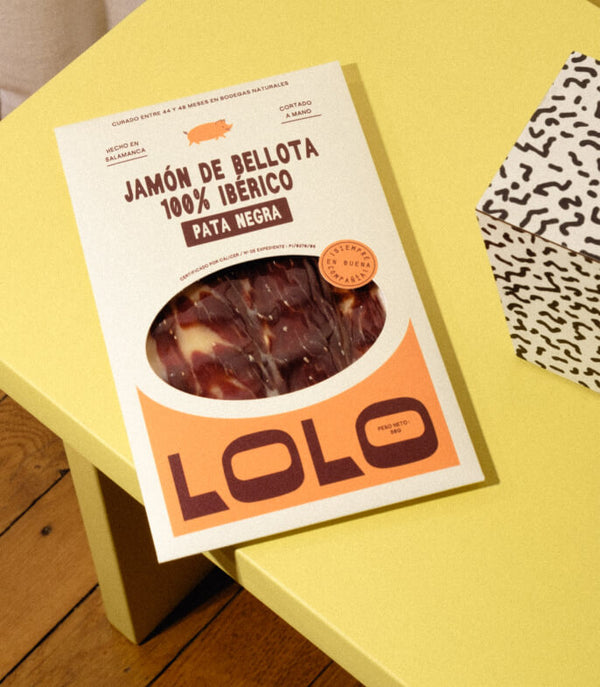
Whole 7 to 8 kg ham, cured 44 to 48 months.
649,90€
Javier opens and carves one of our pieces. Watch the order in which he lays out his tools before he touches the ham, and the moment he sharpens, always before and never during.
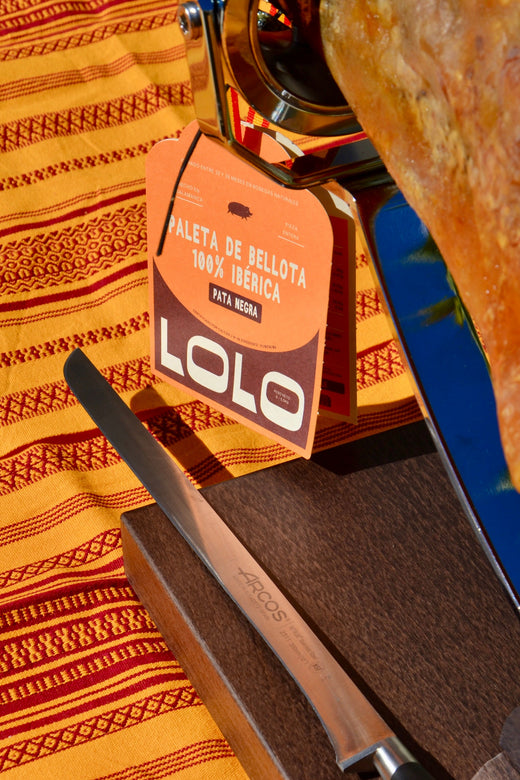
The knife
The jamonero knife, €39.90
A long, flexible blade. The thin slice comes from the flex as much as from the length. It is the first tool the decree lists, and the one Javier uses in the video.
39,90€
Our rotating jamón stand is sold separately · shipped from Spain · free shipping over €89.90
Conclusion
A new course, an old craft
Spain took four years to write down what this craft demands, and stopped just short of closing it. That makes sense. A decree can assess a cutting angle or a hygiene routine, but it cannot assess what a cortador smells when he pushes the cala into a piece. The text pins down what can be checked and leaves the rest to the trade.
- Be wary of the word “certified”, and ask who did the certifying. A state qualification and an association title do not mean the same thing.
- Look at the workstation before you look at the slice. A steady stand, blades sharpened ahead of time and a clean board take three seconds to check.
- For your own piece, decide first how long it has to last. A ham you finish in a month is opened differently from one meant to last six.

Leave a comment
This site is protected by hCaptcha and the hCaptcha Privacy Policy and Terms of Service apply.